

Go 函数单元测试的错误处理策略
在Go函数单元测试中,错误处理有两种主要策略:1.将错误表示为error类型的具体值,用于断言预期值;2.使用通道向测试函数传递错误,适用于测试并发代码。实战案例中,使用错误值策略确保函数对负数输入返回0。
在 Go 函数单元测试中,错误处理有两种主要策略:1. 将错误表示为 error 类型的具体值,用于断言预期值;2. 使用通道向测试函数传递错误,适用于测试并发代码。实战案例中,使用错误值策略确保函数对负数输入返回 0。

Go 函数单元测试的错误处理策略
单元测试是确保代码健壮性和可靠性的重要步骤。在 Go 中,可以使用 testing 包来执行单元测试,其中包含处理错误的几种策略。
错误处理策略
Go 中有两种处理错误的主要策略:
1. 错误值
将错误表示为 error 类型的具体值。要在单元测试中使用此方法,可以将错误断言为预期的值:
func TestMyFunction(t *testing.T) {
    err := myFunction()
    if err != nil {
        t.Errorf("myFunction returned an unexpected error: %v", err)
    }
}
2. 错误通道
使用通道向测试函数传递错误。这对于测试并发代码很有用,因为可以同时观察多个错误:
func TestMyConcurrentFunction(t *testing.T) {
    done := make(chan error)
    go func() { done <- myConcurrentFunction() }()
    select {
    case err := <-done:
        if err != nil {
            t.Errorf("myConcurrentFunction returned an unexpected error: %v", err)
        }
    case <-time.After(time.Second):
        t.Errorf("myConcurrentFunction did not complete within the timeout")
    }
}
实战案例
考虑以下函数,它将切片中的数字相加:
func sum(numbers []int) int {
    total := 0
    for _, num := range numbers {
        if num < 0 {
            return 0
        }
        total += num
    }
    return total
}
使用错误值策略进行单元测试,可以确保函数对负数输入返回 0:
func TestSum(t *testing.T) {
    tests := []struct {
        input  []int
        result int
    }{
        {[]int{1, 2, 3}, 6},
        {[]int{0, 0, 0}, 0},
        {[]int{-1, 0, 1}, 0},
    }

    for _, test := range tests {
        result := sum(test.input)
        if result != test.result {
            t.Errorf("sum(%v) returned %d, expected %d", test.input, result, test.result)
        }
    }
} 
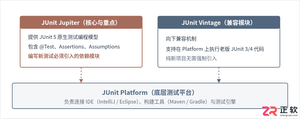
学习如何通过结构化测试、精准断言和参数化设计提升JUnit测试效率,避免常见陷阱,实现高质量、可维护的单元测试代码。
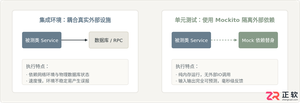
详细讲解在Java单元测试中如何使用Mockito模拟依赖对象,包括引入依赖、创建Mock、打桩返回值、行为验证以及Mock与Spy的核心差异和常见陷阱排查。
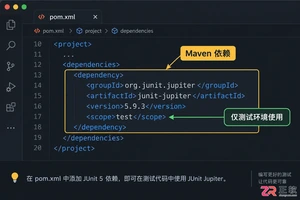
适合初学者的JUnit入门指南,详解如何配置环境、编写首个测试用例、使用断言验证结果,并分析单元测试的适用场景与例外情况。

defer语句在Go中用于延迟执行资源清理,但其错误不会自动传播。例如file.Close()可能返回IO错误,若直接deferfile.Close()则错误被忽略。正确做法是通过匿名函数捕获关闭错误,并仅在主逻辑无错误时将其赋值给命名返回值,避免覆盖主要错误。处理多个资源时,每个defer都应检查当前错误状态,确保按顺序安全关闭并正确传递清理阶段的错误,从而保证程序健壮性。

Golang错误处理机制通过减少内存分配提升性能。频繁创建相同错误会增加内存负担,解决方案是预定义错误变量并重复使用。例如:var(ErrNotFound=errors.New("resourcenotfound")),在函数中直接返回该错误而非新建。其次,避免在错误信息中使用字符串拼接以减少内存分配。自定义错误类型可进一步优化性能,如定义结构体包含错误码和信息,便于类型断言而非反射比较。例如:typeMyErrorstruct{Codeint},使用类型断言判断错误类型。Golang

首先通过FetchContent引入GoogleTest,再编写测试用例并创建测试可执行文件,接着用enable_testing()和add_test()注册测试,最后通过ctest运行测试。完整流程包括:1.在CMakeLists.txt中使用FetchContent下载gtest;2.编写被测函数及gtest测试代码;3.配置target_link_libraries链接gtest_main和pthread;4.调用enable_testing()并注册测试目标;5.构建后运行ctest执行测试。关键

Go语言中函数返回错误的最佳实践是利用error接口构建清晰的错误流。通过errors.New创建简单错误、fmt.Errorf添加上下文或包装错误(%w),实现多层错误溯源;避免直接返回字符串以保留错误语义;使用errors.Is和errors.As判断和提取特定错误;自定义错误类型可携带结构化信息,增强可维护性。

Go1.13引入errors.Is和errors.As用于精准处理包装错误。1.errors.Is判断错误链中是否包含指定错误值,适用于匹配预定义错误;2.errors.As检查错误链中是否存在特定类型错误并赋值,适用于提取结构化错误信息。两者均支持递归遍历错误链,比传统比较更强大。使用%w包装错误可确保Is/As正常工作,建议在需上下文时包装错误,并用Is替代==、用As提取具体错误类型。





火山引擎是字节跳动旗下企业级云与AI服务平台。聚焦大模型核心能力,依托字节自研豆包多模态大模型,凭借火山方舟一站式平台,提供模型精调、推理部署、智能应用搭建等全链路服务,结合高性能AI算力,助力各行业快速落地大模型数字化与智能化应用。