

count\_if与all\_of高效使用技巧解析
count_if用于统计满足条件的元素个数,all_of用于判断所有元素是否都满足条件,二者均通过谓词进行判断,可结合Lambda表达式简化使用,在处理复杂数据时需设计合适的谓词,并注意其线性时间复杂度带来的性能影响。
count_if用于统计满足条件的元素个数,all_of用于判断所有元素是否都满足条件,二者均通过谓词进行判断,可结合Lambda表达式简化使用,在处理复杂数据时需设计合适的谓词,并注意其线性时间复杂度带来的性能影响。

统计满足条件的元素个数,以及判断是否所有元素都满足条件,这就是 count_if 和 all_of 的核心作用。前者用于计数,后者用于验证,都是 STL 中非常实用的工具。
解决方案
count_if 算法统计容器中满足特定谓词(函数对象或函数指针)的元素个数。它的基本用法如下:
#include#include #include bool isEven(int i) { return (i % 2) == 0; } int main() { std::vector numbers = {1, 2, 3, 4, 5, 6}; int evenCount = std::count_if(numbers.begin(), numbers.end(), isEven); std::cout << "偶数个数: " << evenCount << std::endl; // 输出: 偶数个数: 3 return 0; }
all_of 算法检查容器中的所有元素是否都满足特定谓词。 如果所有元素都满足条件,则返回 true,否则返回 false。
#include#include #include bool isPositive(int i) { return i > 0; } int main() { std::vector numbers1 = {1, 2, 3, 4, 5, 6}; std::vector numbers2 = {-1, 2, 3, 4, 5, 6}; bool allPositive1 = std::all_of(numbers1.begin(), numbers1.end(), isPositive); bool allPositive2 = std::all_of(numbers2.begin(), numbers2.end(), isPositive); std::cout << "numbers1 所有元素都大于 0: " << std::boolalpha << allPositive1 << std::endl; // 输出: numbers1 所有元素都大于 0: true std::cout << "numbers2 所有元素都大于 0: " << std::boolalpha << allPositive2 << std::endl; // 输出: numbers2 所有元素都大于 0: false return 0; }
如何使用 Lambda 表达式简化 count_if 和 all_of 的使用?
Lambda 表达式允许你定义匿名函数,可以直接在 count_if 和 all_of 中使用,避免了定义单独的函数。
#include#include #include int main() { std::vector numbers = {1, 2, 3, 4, 5, 6}; // 使用 lambda 表达式统计偶数个数 int evenCount = std::count_if(numbers.begin(), numbers.end(), [](int i){ return (i % 2) == 0; }); std::cout << "偶数个数: " << evenCount << std::endl; // 使用 lambda 表达式检查所有元素是否都大于 0 bool allPositive = std::all_of(numbers.begin(), numbers.end(), [](int i){ return i > 0; }); std::cout << "所有元素都大于 0: " << std::boolalpha << allPositive << std::endl; return 0; }
使用 Lambda 表达式的好处是代码更简洁,尤其是在谓词逻辑比较简单的情况下。 它可以直接嵌入到算法调用中,避免了单独定义函数的开销。
在实际项目中,如何高效地使用 count_if 和 all_of 处理复杂数据?
在处理复杂数据时,你需要根据数据的结构和需要满足的条件来设计谓词。 例如,假设你有一个 Student 类,你需要统计所有年龄大于 18 岁的学生人数,或者检查是否所有学生的成绩都及格。
#include#include #include class Student { public: std::string name; int age; double score; Student(std::string name, int age, double score) : name(name), age(age), score(score) {} }; int main() { std::vector students = { {"Alice", 20, 85.0}, {"Bob", 17, 60.0}, {"Charlie", 19, 90.0}, {"David", 21, 55.0} }; // 统计年龄大于 18 岁的学生人数 int adultCount = std::count_if(students.begin(), students.end(), [](const Student& s){ return s.age > 18; }); std::cout << "年龄大于 18 岁的学生人数: " << adultCount << std::endl; // 检查是否所有学生的成绩都及格(>= 60) bool allPassed = std::all_of(students.begin(), students.end(), [](const Student& s){ return s.score >= 60.0; }); std::cout << "所有学生的成绩都及格: " << std::boolalpha << allPassed << std::endl; return 0; }
在这个例子中, Lambda 表达式访问了 Student 对象的成员变量,并根据这些变量的值来判断是否满足条件。 关键在于根据你的数据结构设计合适的谓词。
使用 count_if 和 all_of 时需要注意哪些性能问题?
虽然 count_if 和 all_of 使用起来很方便,但也要注意它们的性能。 它们都是线性时间复杂度的算法,即需要遍历容器中的所有元素。 对于大型容器,这可能会成为性能瓶颈。
以下是一些优化建议:
- 尽量使用简单的谓词: 复杂的谓词计算会增加每个元素的处理时间。
- 避免不必要的拷贝: 如果谓词需要访问对象的成员变量,尽量使用引用传递,避免不必要的拷贝。
- 考虑使用并行算法: 对于非常大的容器,可以考虑使用并行版本的
count_if和all_of,例如使用 OpenMP 或 C++17 的并行算法。
此外,如果你的容器是有序的,并且谓词也具有某种单调性,那么可以考虑使用二分查找等更高效的算法来替代 count_if 和 all_of。 但是,这需要根据具体情况进行分析和设计。
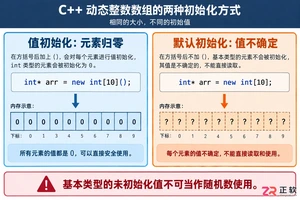
深入解析C++中动态数组的初始化机制,涵盖new操作符的不同用法、基本类型与类对象的初始化差异,以及为何在现代C++开发中应优先使用std::vector。

6月29日,中科院计算机网络信息中心等单位发布“异算方舟”国产计算系统软件生态全栈平台。该平台针对算法供给不足、代码迁移困难、智能应用落地慢三大痛点,打造九衍枢算法库、无界BoundX代码转换大模型、Agent-HiReFlow自动化仿真智能体三大能力,提供从底层算法到代码适配再到智能应用的一体化解决方案。

C++类构造与析构函数详解 C++这门语言,可以说是从C语言这棵大树上衍生出的高级果实,如今的应用普及度有目共睹。作为一种静态类型的通用编程语言,它厉害的地方在于融合了多种编程哲学——无论是传统的面向过程,还是主流的面向对象,乃至数据抽象、泛型编程这些高级概念,它都能很好地支持。正因为这份卓越的扩展
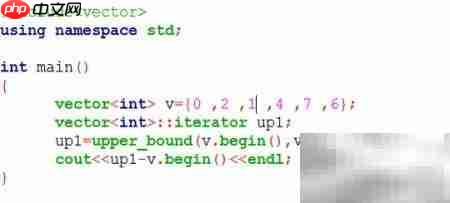
C++中std::upper_bound用法解析 在C++标准模板库(STL)的算法工具箱里,upper_bound() 绝对算得上是一把精准的“探针”。它的核心任务很明确:在一个已经排好序的区间 [first, last) 内,帮你快速定位到第一个**严格大于**指定值 value 的那个元素。这

C++中“常”概念全景解析:从对象、成员到指针与引用 在C++的世界里,“常量性”是一个强大的保障机制。它不仅仅是一个const关键字那么简单,而是构建健壮、安全程序的重要基石。今天,我们就来系统梳理一下围绕“常”的一系列概念:常成员、常对象、常指针与常引用。理解它们,是写出高质量C++代码的关键一

熵基科技发布HuggingZKT算法商城,面向空间智能领域打造端云协同AI算法管理平台,覆盖算法训练、发布、订阅、升级等全生命周期,形成开放高效的算法服务体系,推动园区、楼宇等场景的AI能力敏捷调用,助力空间智能规模化应用迈入新阶段。

芬兰阿尔托大学提出用语言引用原文代替坐标定位,解决视觉文档理解中的归因幻觉问题。实验显示,该方法使归因幻觉率从97%降至28%,证据召回率从个位数提升至50%以上,且答案质量几乎不变。

命名空间的基本概念与常见引入问题在C++等编程语言中,命名空间(namespace)是一种将代码标识符(如变量、函数、类名)封装在特定名称下的机制,其主要目的是避免命名冲突,尤其是在大型项目或使用多个第三方库时。使用“using namespace”指令可以将指定命名空间中的所有名称引入当前作用域,

理解递归的基本原理在C语言中,递归是一种函数调用自身的编程技术。要掌握它,首先需要理解其核心思想:将一个复杂的大问题,分解为一个或几个与原问题相似但规模更小的子问题,直到子问题足够简单,可以直接求解。这个过程通常包含两个关键部分:递归出口和递归体。递归出口定义了问题何时不再继续分解,即最简单、可直接






Windows 10 是一款微软推出的经典操作系统,拥有硬件兼容性与多任务处理能力。它更偏向把系统状态查看和常用调节动作放在一起,适合需要持续观察和微调设备状态的场景。

极度公式是一款跨平台专业LaTeX公式识别编辑软件,支持OCR公式识别和多平台编辑。和使用说明,避免使用,享受完整功能与稳定支持。做扫描整理、文字提取和表格转换时,它能把识别后的处理步骤接得更顺,资料录入这类场景会省下不少时间。