

VB中使用WMI获取系统硬件和软件有关信息
WMI是Windows管理接口,支持本地及远程获取软硬件信息。VB中需引用MicrosoftWMIScriptingV1.1库,通过Win32_类如SoundDevice、VideoController等查询声卡、显卡、内存及操作系统详情。该技术广泛用于系统监控与配置。
WMI,全称 Windows Management Instrumentation,说白了就是 Windows 系统里一个强大的管理接口。它的核心能力在于:既能访问本地计算机的各种信息和服务,只要权限到位,还能远程管理其他机器——比如远程重启、关机、终止或启动进程等等,相当实用。
需要注意的是,本文的演示代码基于 VBScript 语法,但核心逻辑在 VB 中同样适用。
先看看微软官方对 WMI 的定位,这里不展开讲理论,直接上干货。
以下是几个具体实例:
在 VB 中使用 WMI,第一步需要先引用库:工程 → 引用 → 勾选“Microsoft WMI Scripting V1.1 Library”。
下面依次给出获取显卡、声卡、内存和操作系统信息的代码示例。
声卡信息
Private Sub wmiSoundDeviceInfo()

Dim wmiObjSet As SWbemObjectSet
Dim obj As SWbemObject

Set wmiObjSet = GetObject(winmgmts:{impersonationLevel=impersonate}). _
InstancesOf(Win32_SoundDevice)
On Local Error Resume Next

For Each obj In wmiObjSet
MsgBox obj.ProductName
Next
End Sub
显卡信息
Private Sub wmiVideoControllerInfo()

Dim wmiObjSet As SWbemObjectSet
Dim obj As SWbemObject

Set wmiObjSet = GetObject(winmgmts:{impersonationLevel=impersonate}). _
InstancesOf(Win32_VideoController)

On Local Error Resume Next

For Each obj In wmiObjSet
MsgBox obj.VideoProcessor
Next
End Sub
内存信息
Private Sub wmiPhysicalMemoryInfo()

Dim wmiObjSet As SWbemObjectSet
Dim obj As SWbemObject

Set wmiObjSet = GetObject(winmgmts:{impersonationLevel=impersonate}). _
InstancesOf(Win32_PhysicalMemory)

On Local Error Resume Next

For Each objItem In wmiObjSet
Debug.Print BankLabel: & objItem.BankLabel
Debug.Print Capacity: & objItem.Capacity
Debug.Print Caption: & objItem.Caption
Debug.Print CreationClassName: & objItem.CreationClassName
Debug.Print DataWidth: & objItem.DataWidth
Debug.Print Description: & objItem.Description
Debug.Print DeviceLocator: & objItem.DeviceLocator
Debug.Print FormFactor: & objItem.FormFactor
Debug.Print HotSwappable: & objItem.HotSwappable
Debug.Print InstallDate: & objItem.InstallDate
Debug.Print Interlea veDataDepth: & objItem.Interlea veDataDepth
Debug.Print Interlea vePosition: & objItem.Interlea vePosition
Debug.Print Manufacturer: & objItem.Manufacturer
Debug.Print MemoryType: & objItem.MemoryType
Debug.Print Model: & objItem.Model
Debug.Print Name: & objItem.name
Debug.Print OtherIdentifyingInfo: & objItem.OtherIdentifyingInfo
Debug.Print PartNumber: & objItem.PartNumber
Debug.Print PositionInRow: & objItem.PositionInRow
Debug.Print PoweredOn: & objItem.PoweredOn
Debug.Print Removable: & objItem.Removable
Debug.Print Replaceable: & objItem.Replaceable
Debug.Print SerialNumber: & objItem.SerialNumber
Debug.Print SKU: & objItem.SKU
Debug.Print Speed: & objItem.Speed
Debug.Print Status: & objItem.Status
Debug.Print Tag: & objItem.Tag
Debug.Print TotalWidth: & objItem.TotalWidth
Debug.Print TypeDetail: & objItem.TypeDetail
Debug.Print Version: & objItem.Version
Next
End Sub
操作系统信息
Private Sub Command1_Click()
Dim wmiObjSet As SWbemObjectSet
Dim obj As SWbemObject
Dim msg As String
Dim dtb As String
Dim d As String
Dim t As String
Dim bias As Long
On Local Error Resume Next
Set wmiObjSet = GetObject(winmgmts:{impersonationLevel=impersonate}).InstancesOf(Win32_OperatingSystem)
For Each obj In wmiObjSet
MsgBox 你当前使用的系统是 & obj.Caption
Next
End Sub
从上面这些例子不难看出一个规律:WMI 对信息的提取几乎都遵循“Win32_类库名”这样的命名模式。不同的硬件或软件信息,对应着不同的 Win32_ 类。下面这份表格整理了微软操作系统中常用的硬件类。
更完整的 WMI 类信息,可以参考微软官方文档:
http://msdn.microsoft.com/library/default.asp?url=/library/en-us/wmisdk/wmi/accessing_hardware_and_software_through_wmi.asp
该页面也附带了不少示例代码。
常用 Win32_ 类表
Win32 Classes
Microsoft® Windows® classes give you the means to manipulate a variety of objects. The following table identifies the categories of Windows classes.
Category Description
Computer system hardware Classes that represent hardware related objects.
Operating system Classes that represent operating system related objects.
Installed applications Classes that represent software related objects.
WMI service management Classes used to manage WMI.
Performance counters Classes that represent formatted and raw performance data.
硬件类
Computer System Hardware Classes
The Cooling Devices subcategory groups classes that represent instrumentable fans, temperature probes, and refrigeration devices.
Class Description
Win32_Fan Represents the properties of a fan device in the computer system.
Win32_HeatPipe Represents the properties of a heat pipe cooling device.
Win32_Refrigeration Represents the properties of a refrigeration device.
Win32_TemperatureProbe Represents the properties of a temperature sensor (electronic thermometer).
Input Device Classes
The Input Devices subcategory groups classes that represent keyboards and pointing devices.
Class Description
Win32_Keyboard Represents a keyboard installed on a Windows system.
Win32_PointingDevice Represents an input device used to point to and select regions on the display of a Windows computer system.
Mass Storage Classes
Classes in the Mass Storage subcategory represent storage devices such as hard disk drives, CD-ROM drives, and tape drives.
Class Description
Win32_AutochkSetting Represents the settings for the autocheck operation of a disk.
Win32_CDROMDrive Represents a CD-ROM drive on a Windows computer system.
Win32_DiskDrive Represents a physical disk drive as seen by a computer running the Windows operating system.
Win32_FloppyDrive Manages the capabilities of a floppy disk drive.
Win32_PhysicalMedia Represents any type of documentation or storage medium.
Win32_Ta peDrive Represents a tape drive on a Windows computer.
Motherboard, Controller, and Port Classes
The Motherboard, Controllers, and Ports subcategory groups classes that represent system devices. Examples include system memory, cache memory, and controllers.
Class Description
Win32_1394Controller Represents the capabilities and management of a 1394 controller.
Win32_1394ControllerDevice Relates the high-speed serial bus (IEEE 1394 Firewire) Controller and the CIM_LogicalDevice instance connected to it.
Win32_AllocatedResource Relates a logical device to a system resource.
Win32_AssociatedProcessorMemory Relates a processor and its cache memory.
Win32_BaseBoard Represents a baseboard (also known as a motherboard or system board).
Win32_BIOS Represents the attributes of the computer system's basic input/output services (BIOS) that are installed on the computer.
Win32_Bus Represents a physical bus as seen by a Windows operating system.
Win32_CacheMemory Represents cache memory (internal and external) on a computer system.
Win32_ControllerHasHub Represents the hubs downstream from the universal serial bus (USB) controller.
Win32_DeviceBus Relates a system bus and a logical device using the bus.
Win32_DeviceMemoryAddress Represents a device memory address on a Windows system.
Win32_DeviceSettings Relates a logical device and a setting that can be applied to it.
Win32_DMAChannel Represents a direct memory access (DMA) channel on a Windows computer system.
Win32_FloppyController Represents the capabilities and management capacity of a floppy disk drive controller.
Win32_IDEController Represents the capabilities of an Integrated Drive Electronics (IDE) controller device.
Win32_IDEControllerDevice Association class that relates an IDE controller and the logical device.
Win32_InfraredDevice Represents the capabilities and management of an infrared device.
Win32_IRQResource Represents an interrupt request line (IRQ) number on a Windows computer system.
Win32_MemoryArray Represents the properties of the computer system memory array and mapped addresses.
Win32_MemoryArrayLocation Relates a logical memory array and the physical memory array upon which it exists.
Win32_MemoryDevice Represents the properties of a computer system's memory device along with it's associated mapped addresses.
Win32_MemoryDeviceArray Relates a memory device and the memory array in which it resides.
Win32_MemoryDeviceLocation Association class that relates a memory device and the physical memory on which it exists.
Win32_MotherboardDevice Represents a device that contains the central components of the Windows computer system.
Win32_OnBoardDevice Represents common adapter devices built into the motherboard (system board).
Win32_ParallelPort Represents the properties of a parallel port on a Windows computer system.
Win32_PCMCIAController Manages the capabilities of a Personal Computer Memory Card Interface Adapter (PCMCIA) controller device.
Win32_PhysicalMemory Represents a physical memory device located on a computer as a vailable to the operating system.
Win32_PhysicalMemoryArray Represents details about the computer system's physical memory.
Win32_PhysicalMemoryLocation Relates an array of physical memory and its physical memory.
Win32_PNPAllocatedResource Represents an association between logical devices and system resources.
Win32_PNPDevice Relates a device (known to Configuration Manager as a PNPEntity), and the function it performs.
Win32_PNPEntity Represents the properties of a Plug and Play device.
Win32_PortConnector Represents physical connection ports, such as DB-25 pin male, Centronics, and PS/2.
Win32_PortResource Represents an I/O port on a Windows computer system.
Win32_Processor Represents a device capable of interpreting a sequence of machine instructions on a Windows computer system.
Win32_SCSIController Represents a small computer system interface (SCSI) controller on a Windows system.
Win32_SCSIControllerDevice Relates a SCSI controller and the logical device (disk drive) connected to it.
Win32_SerialPort Represents a serial port on a Windows system.
Win32_SerialPortConfiguration Represents the settings for data transmission on a Windows serial port.
Win32_SerialPortSetting Relates a serial port and its configuration settings.
Win32_SMBIOSMemory Represents the capabilities and management of memory-related logical devices.
Win32_SoundDevice Represents the properties of a sound device on a Windows computer system.
Win32_SystemBIOS Relates a computer system (including data such as startup properties, time zones, boot configurations, or administrative passwords) and a system BIOS (services, languages, system management properties).
Win32_SystemDriverPNPEntity Relates a Plug and Play device on the Windows computer system and the driver that supports the Plug and Play device.
Win32_SystemEnclosure Represents the properties associated with a physical system enclosure.
Win32_SystemMemoryResource Represents a system memory resource on a Windows system.
Win32_SystemSlot Represents physical connection points including ports, motherboard slots and peripherals, and proprietary connections points.
Win32_USBController Manages the capabilities of a universal serial bus (USB) controller.
Win32_USBControllerDevice Relates a USB controller and the CIM_LogicalDevice instances connected to it.
Win32_USBHub Represents the management characteristics of a USB hub.
Networking Device Classes
The Networking Devices subcategory groups classes that represent the network interface controller, its configurations, and its settings.
Class Description
Win32_NetworkAdapter Represents a network adapter on a Windows system.
Win32_NetworkAdapterConfiguration Represents the attributes and beha viors of a network adapter. The class is not guaranteed to be supported after the ratification of the Distributed Management Task Force (DMTF) CIM network specification.
Win32_NetworkAdapterSetting Relates a network adapter and its configuration settings.
Power Classes
The Power subcategory groups classes that represent power supplies, batteries, and events related to these devices.
Class Description
Win32_AssociatedBattery Relates a logical device and the battery it is using.
Win32_Battery Represents a battery connected to the computer system.
Win32_CurrentProbe Represents the properties of a current monitoring sensor (ammeter).
Win32_PortableBattery Represents the properties of a portable battery, such as one used for a notebook computer.
Win32_PowerManagementEvent Represents power management events resulting from power state changes.
Win32_UninterruptiblePowerSupply Represents the capabilities and management capacity of an uninterruptible power supply (UPS).
Win32_VoltageProbe Represents the properties of a voltage sensor (electronic voltmeter).
Printing Classes
The Printing subcategory groups classes that represent printers, printer configurations, and print jobs.
Class Description
Win32_DriverForDevice Relates a printer to a printer driver.
Win32_Printer Represents a device connected to a Windows computer system that is capable of reproducing a visual image on a medium.
Win32_PrinterConfiguration Defines the configuration for a printer device.
Win32_PrinterController Relates a printer and the local device to which the printer is connected.
Win32_PrinterDriver Represents the drivers for a Win32_Printer instance.
Win32_PrinterDriverDll Relates a local printer and its driver file (not the driver itself).
Win32_PrinterSetting Relates a printer and its configuration settings.
Win32_PrintJob Represents a print job generated by a Windows application.
Win32_TCPIPPrinterPort Represents a TCP/IP service access point.
Telephony Classes
The Telephony subcategory groups classes that represent plain old telephone modem devices and their associated serial connections.
Class Description
Win32_POTSModem Represents the services and characteristics of a Plain Old Telephone Service (POTS) modem on a Windows system.
Win32_POTSModemToSerialPort Relates a modem and the serial port the modem uses.
Video and Monitor Classes
The Video and Monitors subcategory groups classes that represent monitors, video cards, and their associated settings.
Class Description
Win32_DesktopMonitor Represents the type of monitor or display device attached to the computer system.
Win32_DisplayConfiguration Represents configuration information for the display device on a Windows system. This class is obsolete. In place of this class, use the properties in the Win32_VideoController, Win32_DesktopMonitor, and CIM_VideoControllerResolution classes.
Win32_DisplayControllerConfiguration Represents the video adapter configuration information of a Windows system. This class is obsolete. In place of this class, use the properties in the Win32_VideoController, Win32_DesktopMonitor, and CIM_VideoControllerResolution classes.
Win32_VideoConfiguration This class has been eliminated from Windows XP and later; attempts to use it will generate a fatal error. In place of this class, use the properties contained in the Win32_VideoController, Win32_DesktopMonitor, and CIM_VideoControllerResolution classes.
Win32_VideoController Represents the capabilities and management capacity of the video controller on a Windows computer system.
Win32_VideoSettings Relates a video controller and video settings that can be applied to it.
当然,每个 Win32_ 类都有自身的数据结构。例如,显卡和声卡类的定义如下:
显卡
class Win32_VideoController : CIM_PCVideoController
{
uint16 AcceleratorCapabilities[];
string AdapterCompatibility;
string AdapterDACType;
uint32 AdapterRAM;
uint16 A vailability;
string CapabilityDescriptions[];
string Caption;
uint32 ColorTableEntries;
uint32 ConfigManagerErrorCode;
boolean ConfigManagerUserConfig;
string CreationClassName;
uint32 CurrentBitsPerPixel;
uint32 CurrentHorizontalResolution;
uint64 CurrentNumberOfColors;
uint32 CurrentNumberOfColumns;
uint32 CurrentNumberOfRows;
uint32 CurrentRefreshRate;
uint16 CurrentScanMode;
uint32 CurrentVerticalResolution;
string Description;
string DeviceID;
uint32 DeviceSpecificPens;
uint32 DitherType;
datetime DriverDate;
string DriverVersion;
boolean ErrorCleared;
string ErrorDescription;
uint32 ICMIntent;
uint32 ICMMethod;
string InfFilename;
string InfSection;
datetime InstallDate;
string InstalledDisplayDrivers;
uint32 LastErrorCode;
uint32 MaxMemorySupported;
uint32 MaxNumberControlled;
uint32 MaxRefreshRate;
uint32 MinRefreshRate;
boolean Monochrome;
string Name;
uint16 NumberOfColorPlanes;
uint32 NumberOfVideoPages;
string PNPDeviceID;
uint16 PowerManagementCapabilities[];
boolean PowerManagementSupported;
uint16 ProtocolSupported;
uint32 ReservedSystemPaletteEntries;
uint32 SpecificationVersion;
string Status;
uint16 StatusInfo;
string SystemCreationClassName;
string SystemName;
uint32 SystemPaletteEntries;
datetime TimeOfLastReset;
uint16 VideoArchitecture;
uint16 VideoMemoryType;
uint16 VideoMode;
string VideoModeDescription;
string VideoProcessor;
};
声卡等
class Win32_SoundDevice : CIM_LogicalDevice
{
uint16 A vailability;
string Caption;
uint32 ConfigManagerErrorCode;
boolean ConfigManagerUserConfig;
string CreationClassName;
string Description;
string DeviceID;
uint16 DMABufferSize;
boolean ErrorCleared;
string ErrorDescription;
datetime InstallDate;
uint32 LastErrorCode;
string Manufacturer;
uint32 MPU401Address;
string Name;
string PNPDeviceID;
uint16 PowerManagementCapabilities[];
boolean PowerManagementSupported;
string ProductName;
string Status;
uint16 StatusInfo;
string SystemCreationClassName;
string SystemName;
};
class Win32_PrintJob : CIM_Job
{
string Caption;
string DataType;
string Description;
string Document;
string DriverName;
datetime ElapsedTime;
string HostPrintQueue;
datetime InstallDate;
uint32 JobId;
string JobStatus;
string Name;
string Notify;
string Owner;
uint32 PagesPrinted;
string Parameters;
string PrintProcessor;
uint32 Priority;
uint32 Size;
datetime StartTime;
string Status;
uint32 StatusMask;
datetime TimeSubmitted;
uint32 TotalPages;
datetime UntilTime;
};
比如通过以下代码:
Set wmiObjSet = GetObject(winmgmts:{impersonationLevel=impersonate}). _
InstancesOf(Win32_PrintJob)
就可以获取到打印任务列表等信息。
总的来说,对于 VB 开发者而言,过去获取系统硬件和软件信息往往需要调用复杂的 API。而现在,借助 WMI,这个过程变得非常直接和高效。无论是读取驱动器信息、显卡参数,还是获取共享资源,WMI 都提供了一种统一且简洁的解决方案。
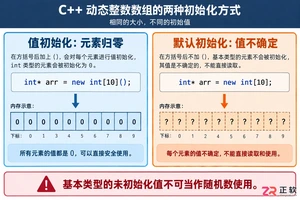
深入解析C++中动态数组的初始化机制,涵盖new操作符的不同用法、基本类型与类对象的初始化差异,以及为何在现代C++开发中应优先使用std::vector。
命名空间的基本概念与常见引入问题在C++等编程语言中,命名空间(namespace)是一种将代码标识符(如变量、函数、类名)封装在特定名称下的机制,其主要目的是避免命名冲突,尤其是在大型项目或使用多个第三方库时。使用“using namespace”指令可以将指定命名空间中的所有名称引入当前作用域,

理解递归的基本原理在C语言中,递归是一种函数调用自身的编程技术。要掌握它,首先需要理解其核心思想:将一个复杂的大问题,分解为一个或几个与原问题相似但规模更小的子问题,直到子问题足够简单,可以直接求解。这个过程通常包含两个关键部分:递归出口和递归体。递归出口定义了问题何时不再继续分解,即最简单、可直接

递归函数的基本概念与适用场景在C语言编程中,递归是一种函数调用自身的编程技巧。它并非适用于所有问题,但在处理某些具有自相似结构的问题时,能提供极其清晰和优雅的解决方案。递归的核心思想是将一个大规模问题分解为一个或多个同类型但规模更小的子问题,直到子问题简单到可以直接求解。典型的适用场景包括树形结构的
理解内存管理的基石在Objective-C的编程世界中,内存管理是开发者必须掌握的核心技能之一。它直接关系到应用的性能、稳定性与资源利用效率。与一些采用自动垃圾回收机制的语言不同,Objective-C在很长一段时间里,依赖一套基于引用计数的、需要开发者部分介入的管理规则。这套规则的核心思想是明确的
理解 dealloc 的角色与时机在 iOS 应用开发中,内存管理是保障应用性能与稳定性的基石。dealloc 方法是 Objective-C 中对象生命周期结束时的关键回调,它标志着对象即将被系统回收内存。正确理解其触发时机至关重要:当一个对象的引用计数降为零时,运行时系统会自动调用该对象的 de
内存管理的基石在Objective-C的世界里,内存管理是开发者必须掌握的核心技能之一。作为一门在手动引用计数(MRC)时代诞生的语言,Objective-C要求程序员对对象的生命周期有清晰的认识。dealloc方法正是这一生命周期中至关重要的终点站。它是一个实例方法,当对象的引用计数降为零时,系统

native2ascii 工具的基本定位在Ja va应用程序的国际化与本地化开发过程中,处理非拉丁字符集是一个常见且关键的环节。Ja va内部使用Unicode字符集来统一表示全球各种语言的文字,但其属性文件(.properties)在历史上要求使用ASCII编码,或者更准确地说,要求非ASCII字

理解 native2ascii 工具的基本用途在软件开发,特别是涉及国际化处理的场景中,开发者常常需要处理不同编码的文本资源。native2ascii 是 Ja va 开发工具包(JDK)中提供的一个命令行实用程序,其主要功能是将包含本地字符编码(非ASCII字符)的文件,转换为包含 Unicode

native2ascii 命令的由来与作用在Ja va开发中,处理国际化资源文件是一个常见需求。资源文件通常以.properties格式存储,用于支持多语言界面。然而,Ja va属性文件默认采用ISO-8859-1字符集编码,这导致了一个直接的问题:当文件中包含非拉丁字符(如中文、日文、韩文等)时,






Windows 10 是一款微软推出的经典操作系统,拥有硬件兼容性与多任务处理能力。它更偏向把系统状态查看和常用调节动作放在一起,适合需要持续观察和微调设备状态的场景。

极度公式是一款跨平台专业LaTeX公式识别编辑软件,支持OCR公式识别和多平台编辑。和使用说明,避免使用,享受完整功能与稳定支持。做扫描整理、文字提取和表格转换时,它能把识别后的处理步骤接得更顺,资料录入这类场景会省下不少时间。