

Java中的自定义异常怎么实现
Java中的异常Java中默认的异常信息有哪些呢?Java程序中捕获异常之后会将异常进行输出,不知道细心的同学有没有注意到一点,输出的异常是什么东西呢?下面来看一个常见的ArithmeticException异常:java.lang.ArithmeticException:/byzeroatgreenhouse.ExceptionTest.testException(ExceptionTest.java:16)atsun.reflect.NativeMethodAccessorImpl.invoke0(N
Java中的异常
Java中默认的异常信息有哪些呢?Java程序中捕获异常之后会将异常进行输出,不知道细心的同学有没有注意到一点,输出的异常是什么东西呢?下面来看一个常见的ArithmeticException异常:
java.lang.ArithmeticException: / by zero
    at greenhouse.ExceptionTest.testException(ExceptionTest.java:16)
    at sun.reflect.NativeMethodAccessorImpl.invoke0(Native Method)
    at sun.reflect.NativeMethodAccessorImpl.invoke(NativeMethodAccessorImpl.java:39)
    at sun.reflect.DelegatingMethodAccessorImpl.invoke(DelegatingMethodAccessorImpl.java:25)
    at java.lang.reflect.Method.invoke(Method.java:597)
    at org.junit.runners.model.FrameworkMethod$1.runReflectiveCall(FrameworkMethod.java:44)
    at org.junit.internal.runners.model.ReflectiveCallable.run(ReflectiveCallable.java:15)
    at org.junit.runners.model.FrameworkMethod.invokeExplosively(FrameworkMethod.java:41)
    at org.junit.internal.runners.statements.InvokeMethod.evaluate(InvokeMethod.java:20)
    at org.junit.runners.BlockJUnit4ClassRunner.runChild(BlockJUnit4ClassRunner.java:76)
    at org.junit.runners.BlockJUnit4ClassRunner.runChild(BlockJUnit4ClassRunner.java:50)
    at org.junit.runners.ParentRunner$3.run(ParentRunner.java:193)
    at org.junit.runners.ParentRunner$1.schedule(ParentRunner.java:52)
    at org.junit.runners.ParentRunner.runChildren(ParentRunner.java:191)
    at org.junit.runners.ParentRunner.access$000(ParentRunner.java:42)
    at org.junit.runners.ParentRunner$2.evaluate(ParentRunner.java:184)
    at org.junit.runners.ParentRunner.run(ParentRunner.java:236)
    at org.junit.runner.JUnitCore.run(JUnitCore.java:157)
    at com.intellij.junit4.JUnit4IdeaTestRunner.startRunnerWithArgs(JUnit4IdeaTestRunner.java:68)
    at com.intellij.rt.execution.junit.IdeaTestRunner$Repeater.startRunnerWithArgs(IdeaTestRunner.java:47)
    at com.intellij.rt.execution.junit.JUnitStarter.prepareStreamsAndStart(JUnitStarter.java:242)
    at com.intellij.rt.execution.junit.JUnitStarter.main(JUnitStarter.java:70)
再看看一个Java程序员耳熟能详的NullPointerException空指针异常:
java.lang.NullPointerException
    at greenhouse.ExceptionTest.testException(ExceptionTest.java:16)
    at sun.reflect.NativeMethodAccessorImpl.invoke0(Native Method)
    at sun.reflect.NativeMethodAccessorImpl.invoke(NativeMethodAccessorImpl.java:39)
    at sun.reflect.DelegatingMethodAccessorImpl.invoke(DelegatingMethodAccessorImpl.java:25)
    at java.lang.reflect.Method.invoke(Method.java:597)
    at org.junit.runners.model.FrameworkMethod$1.runReflectiveCall(FrameworkMethod.java:44)
    at org.junit.internal.runners.model.ReflectiveCallable.run(ReflectiveCallable.java:15)
    at org.junit.runners.model.FrameworkMethod.invokeExplosively(FrameworkMethod.java:41)
    at org.junit.internal.runners.statements.InvokeMethod.evaluate(InvokeMethod.java:20)
    at org.junit.runners.BlockJUnit4ClassRunner.runChild(BlockJUnit4ClassRunner.java:76)
    at org.junit.runners.BlockJUnit4ClassRunner.runChild(BlockJUnit4ClassRunner.java:50)
    at org.junit.runners.ParentRunner$3.run(ParentRunner.java:193)
    at org.junit.runners.ParentRunner$1.schedule(ParentRunner.java:52)
    at org.junit.runners.ParentRunner.runChildren(ParentRunner.java:191)
    at org.junit.runners.ParentRunner.access$000(ParentRunner.java:42)
    at org.junit.runners.ParentRunner$2.evaluate(ParentRunner.java:184)
    at org.junit.runners.ParentRunner.run(ParentRunner.java:236)
    at org.junit.runner.JUnitCore.run(JUnitCore.java:157)
    at com.intellij.junit4.JUnit4IdeaTestRunner.startRunnerWithArgs(JUnit4IdeaTestRunner.java:68)
    at com.intellij.rt.execution.junit.IdeaTestRunner$Repeater.startRunnerWithArgs(IdeaTestRunner.java:47)
    at com.intellij.rt.execution.junit.JUnitStarter.prepareStreamsAndStart(JUnitStarter.java:242)
    at com.intellij.rt.execution.junit.JUnitStarter.main(JUnitStarter.java:70)
大家有没有发现一个特点,就是异常的输出中能够精确的输出异常出现的地点,精确到每一行代码,还有后面一大堆的执行过程类调用,也都打印出来了,这些信息从哪儿来呢?
这些信息是从栈中获取的,在打印异常日志的时候,会从JVM 栈中去获取这些调用信息。能够精确的定位异常出现的异常当然是好,但是我们有时候考虑到程序的性能,以及一些需求时,我们有时候并不需要完全的打印这些信息,并且去方法调用栈中获取相应的信息,是有性能消耗的,对于一些性能要求高的程序,我们完全可以在异常处理方面为程序性能做一个性能提升。
自定义Java异常类
所以如何避免输出这些堆栈信息呢? 那么自定义异常就可以解决这个问题:
首先,自定义异常需要继承RuntimeException,然后,再通过是重写fillInStackTrace,toString 方法,例如下面我定义一个AppException异常:
package com.green.monitor.common.exception;

import java.text.MessageFormat;
/**
 * 自定义异常类
 */
public class AppException extends RuntimeException {

	private boolean isSuccess = false;
	private String key;
	private String info;

	public AppException(String key) {
		super(key);
		this.key = key;
		this.info = key;
	}

	public AppException(String key, String message) {
		super(MessageFormat.format("{0}[{1}]", key, message));
		this.key = key;
		this.info = message;
	}

	public AppException(String message, String key, String info) {
		super(message);
		this.key = key;
		this.info = info;
	}

	public boolean isSuccess() {
		return isSuccess;
	}

	public String getKey() {
		return key;
	}

	public void setKey(String key) {
		this.key = key;
	}

	public String getInfo() {
		return info;
	}

	public void setInfo(String info) {
		this.info = info;
	}

	@Override
	public Throwable fillInStackTrace() {
		return this;
	}

	@Override
	public String toString() {
		return MessageFormat.format("{0}[{1}]",this.key,this.info);
	}
}
Java异常源码
那么为什么要重写fillInStackTrace,和 toString 方法呢? 我们首先来看源码是怎么一回事。
public class RuntimeException extends Exception {
    static final long serialVersionUID = -7034897190745766939L;

    /** Constructs a new runtime exception with null as its
     * detail message.  The cause is not initialized, and may subsequently be
     * initialized by a call to {@link #initCause}.
     */
    public RuntimeException() {
	      super();
    }

    /** Constructs a new runtime exception with the specified detail message.
     * The cause is not initialized, and may subsequently be initialized by a
     * call to {@link #initCause}.
     *
     * @param   message   the detail message. The detail message is saved for
     *          later retrieval by the {@link #getMessage()} method.
     */
    public RuntimeException(String message) {
        super(message);
    }

    /**
     * Constructs a new runtime exception with the specified detail message and
     * cause.  Note that the detail message associated with
     * cause is not automatically incorporated in
     * this runtime exception's detail message.
     *
     * @param  message the detail message (which is saved for later retrieval
     *         by the {@link #getMessage()} method).
     * @param  cause the cause (which is saved for later retrieval by the
     *         {@link #getCause()} method).  (A null value is
     *         permitted, and indicates that the cause is nonexistent or
     *         unknown.)
     * @since  1.4
     */
    public RuntimeException(String message, Throwable cause) {
        super(message, cause);
    }

    /** Constructs a new runtime exception with the specified cause and a
     * detail message of (cause==null ? null : cause.toString())
     * (which typically contains the class and detail message of
     * cause).  This constructor is useful for runtime exceptions
     * that are little more than wrappers for other throwables.
     *
     * @param  cause the cause (which is saved for later retrieval by the
     *         {@link #getCause()} method).  (A null value is
     *         permitted, and indicates that the cause is nonexistent or
     *         unknown.)
     * @since  1.4
     */
    public RuntimeException(Throwable cause) {
        super(cause);
    }
}
RuntimeException是继承Exception,但是它里面只是调用了父类的方法,本身是没有做什么其余的操作。那么继续看Exception里面是怎么回事。
public class Exception extends Throwable {
    static final long serialVersionUID = -3387516993124229948L;

    /**
     * Constructs a new exception with null as its detail message.
     * The cause is not initialized, and may subsequently be initialized by a
     * call to {@link #initCause}.
     */
    public Exception() {
	    super();
    }

    /**
     * Constructs a new exception with the specified detail message.  The
     * cause is not initialized, and may subsequently be initialized by
     * a call to {@link #initCause}.
     *
     * @param   message   the detail message. The detail message is saved for
     *          later retrieval by the {@link #getMessage()} method.
     */
    public Exception(String message) {
	    super(message);
    }

    /**
     * Constructs a new exception with the specified detail message and
     * cause.  Note that the detail message associated with
     * cause is not automatically incorporated in
     * this exception's detail message.
     *
     * @param  message the detail message (which is saved for later retrieval
     *         by the {@link #getMessage()} method).
     * @param  cause the cause (which is saved for later retrieval by the
     *         {@link #getCause()} method).  (A null value is
     *         permitted, and indicates that the cause is nonexistent or
     *         unknown.)
     * @since  1.4
     */
    public Exception(String message, Throwable cause) {
        super(message, cause);
    }

    /**
     * Constructs a new exception with the specified cause and a detail
     * message of (cause==null ? null : cause.toString()) (which
     * typically contains the class and detail message of cause).
     * This constructor is useful for exceptions that are little more than
     * wrappers for other throwables (for example, {@link
     * java.security.PrivilegedActionException}).
     *
     * @param  cause the cause (which is saved for later retrieval by the
     *         {@link #getCause()} method).  (A null value is
     *         permitted, and indicates that the cause is nonexistent or
     *         unknown.)
     * @since  1.4
     */
    public Exception(Throwable cause) {
        super(cause);
    }
}
从源码中可以看到,Exception里面也是直接调用了父类的方法,和RuntimeException一样,自己其实并没有做什么。那么直接来看Throwable里面是怎么一回事:
public class Throwable implements Serializable {
  public Throwable(String message) {
        fillInStackTrace();
        detailMessage = message;
    }

     /**
     * Fills in the execution stack trace. This method records within this
     * Throwable object information about the current state of
     * the stack frames for the current thread.
     *
     * @return  a reference to this Throwable instance.
     * @see     java.lang.Throwable#printStackTrace()
     */
    public synchronized native Throwable fillInStackTrace();

       /**
     * Provides programmatic access to the stack trace information printed by
     * {@link #printStackTrace()}.  Returns an array of stack trace elements,
     * each representing one stack frame.  The zeroth element of the array
     * (assuming the array's length is non-zero) represents the top of the
     * stack, which is the last method invocation in the sequence.  Typically,
     * this is the point at which this throwable was created and thrown.
     * The last element of the array (assuming the array's length is non-zero)
     * represents the bottom of the stack, which is the first method invocation
     * in the sequence.
     *
     * Some virtual machines may, under some circumstances, omit one
     * or more stack frames from the stack trace.  In the extreme case,
     * a virtual machine that has no stack trace information concerning
     * this throwable is permitted to return a zero-length array from this
     * method.  Generally speaking, the array returned by this method will
     * contain one element for every frame that would be printed by
     * printStackTrace.
     *
     * @return an array of stack trace elements representing the stack trace
     *         pertaining to this throwable.
     * @since  1.4
     */
    public StackTraceElement[] getStackTrace() {
        return (StackTraceElement[]) getOurStackTrace().clone();
    }

    private synchronized StackTraceElement[] getOurStackTrace() {
        // Initialize stack trace if this is the first call to this method
        if (stackTrace == null) {
            int depth = getStackTraceDepth();
            stackTrace = new StackTraceElement[depth];
            for (int i=0; i < depth; i++)
                stackTrace[i] = getStackTraceElement(i);
        }
        return stackTrace;
    }

    /**
     * Returns the number of elements in the stack trace (or 0 if the stack
     * trace is unavailable).
     *
     * package-protection for use by SharedSecrets.
     */
    native int getStackTraceDepth();

    /**
     * Returns the specified element of the stack trace.
     *
     * package-protection for use by SharedSecrets.
     *
     * @param index index of the element to return.
     * @throws IndexOutOfBoundsException if index < 0 ||
     *         index >= getStackTraceDepth()
     */
    native StackTraceElement getStackTraceElement(int index);

    /**
     * Returns a short description of this throwable.
     * The result is the concatenation of:
     *
-
*
- the {@linkplain Class#getName() name} of the class of this object *
- ": " (a colon and a space) *
- the result of invoking this object's {@link #getLocalizedMessage} * method *
从源码中可以看到,到Throwable就几乎到头了,在fillInStackTrace() 方法是一个native方法,这方法也就是会调用底层的C语言,返回一个Throwable对象,toString 方法,返回的是throwable的简短描述信息,并且在getStackTrace 方法和 getOurStackTrace 中调用的都是native方法getStackTraceElement,而这个方法是返回指定的栈元素信息,所以这个过程肯定是消耗性能的,那么我们自定义异常中的重写toString方法和fillInStackTrace方法就可以不从栈中去获取异常信息,直接输出,这样对系统和程序来说,相对就没有那么"重",是一个优化性能的非常好的办法。
按照上面我们举例的自定义AppException异常,如果出现异常了,这个AppException异常输出是什么样的信息呢?请看下面吧:
@Test
    public void testException(){
        try {
            String str =null;
            System.out.println(str.charAt(0));
        }catch (Exception e){
            throw new AppException("000001","空指针异常");
        }
    }
执行上面单元测试,在异常异常的时候,系统将会打印我们自定义的异常信息:
000001[空指针异常]
Process finished with exit code -1
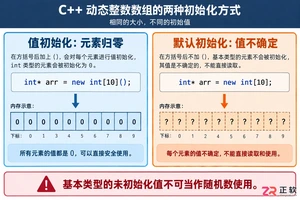
深入解析C++中动态数组的初始化机制,涵盖new操作符的不同用法、基本类型与类对象的初始化差异,以及为何在现代C++开发中应优先使用std::vector。

谷歌浏览器Mac版官方安装指南 谷歌浏览器Mac版官方安装入口是https://www.google.com/chrome/,需macOS 12+系统、500MB空间,下载.dmg后拖入应用程序安装,支持多设备同步、性能优化与隐私保护功能。 苹果电脑Chrome的安装入口究竟在哪里?这个问题最近可是

Chrome中JavaScript未执行需依次检查:一、移除站点级禁用并添加允许域名;二、开启全局JavaScript开关;三、禁用干扰扩展;四、在开发者工具中启用JavaScript;五、重置内容设置为默认。 有时在Chrome里打开网页,会发现交互按钮点了没反应,数据加载不出来,页面仿佛“静止”

IE浏览器怀旧版在线网址:一次精准的技术时光回溯 最近,不少老用户和怀旧爱好者在反复搜索一个问题:那个经典的Internet Explorer,如今还能在哪里原汁原味地体验到?答案指向一个特定的地址:https://ie.microsoft.com/legacy/。 这个网站远不止是一个简单的“皮肤


Chrome官方免验证入口为https://www.google.cn/chrome/,提供全平台安装包、免登录即用、本地化安全机制及引擎级性能优化。 到底该去哪里找正版、免费且无需繁琐验证的Chrome浏览器入口?这个问题困扰了不少网友。今天,我们就来直通核心,为大家详细拆解Chrome引擎的官方

Java堆是JVM存储对象的核心内存区域,配置需结合场景:单体应用适中设置;大数据处理需大堆并关注GC停顿;微服务强调快速启动;高并发需精细划分堆区域。关键参数-Xms和-Xmx建议等值以稳定性能。垃圾回收器选择影响效率,如G1适用于大堆,ZGC可实现低停顿。内存错误时需监控堆状态。

Java堆内存溢出错误通常因内存泄漏、数据处理需求过大或JVM参数配置不当引起。排查时可借助jmap、堆转储及MAT等工具定位问题。解决方案包括调整JVM内存参数(如-Xmx)、修复代码中的内存泄漏、优化大数据处理逻辑,并建立持续监控与预防机制,以保障应用稳定运行。
XML在Java开发中用于配置、数据交换等场景。解析方式主要有DOM、SAX、StAX及第三方库。DOM适合操作小文件,SAX/StAX适合处理大文件流,JAXB用于对象与XML映射。选型需结合数据大小、内存、性能及团队熟悉度,现代框架常封装底层解析。
命名空间的基本概念与常见引入问题在C++等编程语言中,命名空间(namespace)是一种将代码标识符(如变量、函数、类名)封装在特定名称下的机制,其主要目的是避免命名冲突,尤其是在大型项目或使用多个第三方库时。使用“using namespace”指令可以将指定命名空间中的所有名称引入当前作用域,






Windows 10 是一款微软推出的经典操作系统,拥有硬件兼容性与多任务处理能力。它更偏向把系统状态查看和常用调节动作放在一起,适合需要持续观察和微调设备状态的场景。

极度公式是一款跨平台专业LaTeX公式识别编辑软件,支持OCR公式识别和多平台编辑。和使用说明,避免使用,享受完整功能与稳定支持。做扫描整理、文字提取和表格转换时,它能把识别后的处理步骤接得更顺,资料录入这类场景会省下不少时间。