

Python 实现三子棋游戏教程
一、基本流程三子棋游戏实现逻辑如下:1、创建初始化3*3棋盘;2、玩家执U子,先进行落子;3、胜负判定【胜、负、和棋】,若胜负未分,则继续如下4、电脑执T子,进行落子;5、胜负判定,若胜负未分,则从步骤2继续执行二、基本步骤1、菜单界面选择1是开始游戏,选择2是退出游戏defmenu():print('-'*20)print('1---------------begin')print('2---------------exit')print('ple
一、基本流程
三子棋游戏实现逻辑如下:
1、创建初始化3*3棋盘;
2、玩家执U子,先进行落子;
3、胜负判定【胜、负、和棋】,若胜负未分,则继续如下
4、电脑执T子,进行落子;
5、胜负判定,若胜负未分,则从步骤2继续执行
二、基本步骤
1、菜单界面
选择1是开始游戏,选择2是退出游戏
def menu():
    print('-'*20)
    print('1---------------begin')
    print('2---------------exit')
    print('please select begin or exit')
    print('-' * 20)
    while(1):
        select = input('please input:')
        if select == '1':
            begin_games()
            pass
        elif select == '2':
            print('exit the game')
            break
            #pass
    pass
2、初始化棋盘、打印棋盘
三子棋棋盘是3*3的方阵,在python中用列表来进行存储。
chess_board = [[0, 0, 0], [0, 0, 0], [0, 0, 0]]
那么如何将这个存储列表打印出来,成为棋盘呢?
def init_cheaa_board(chess_board): #先对列表进行初始化
    for i in range(MAX_ROW):
        for j in range(MAX_COL):
            chess_board[i][j] = ' '
    pass

def print_chess_board(chess_board): #棋盘打印
    print('*'+'-'*7+'*'+'-'*7+'*'+'-'*7+'*')
    for i in range(MAX_ROW):
        print('|'+' '*3+chess_board[i][0]+' '*3+'|'+' '*3+chess_board[i][1]+' '*3+'|'+' '*3+chess_board[i][2]+' '*3+'|')
        print('*' + '-' * 7 + '*' + '-' * 7 + '*' + '-' * 7 + '*')
        pass
    pass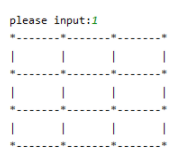
3、玩家落子
玩家在3*3的棋盘中选择落子的横纵坐标。坐标点需要满足:1、该点在棋盘内;2、该点还未置子。
def player_first(chess_board):
    while(1):
        x = int(input('please input x:'))
        y = int(input('please input y:'))
        if(chess_board[x][y] != ' '): #若已被置子,则重新选择坐标
            print('This position is already occupied!')
            pass
        elif(x >= MAX_ROW or y >= MAX_COL or x < 0 or y < 0): #所选坐标超出棋盘范围,重新选择坐标
            print('This position is beyond the chessboard!')
            pass
        else: #若坐标可以落子,则将该坐标置为玩家的棋子U
            chess_board[x][y] = 'U'
            print_chess_board(chess_board)
            #return x,y
            break
            pass
    pass
4、电脑落子
电脑落子算法:
4.1、先检查一下棋盘,看电脑已占有棋面中是否已经有两子连成、即将成棋的状态。若已有,则获取可以促成胜利的坐标点,进行落子T;
4.2、若4.1不满足,则再去检查一下棋盘,看玩家已占有棋面中是否已经有两子连成、即将成棋的状态。若已有,则获取玩家即将胜利的坐标点,落子T进行拦截;
4.3、若4.1、4.2均不满足,则在棋面中选择电脑端有利的点进行落子;
A、先判断中心位置[1][1]处是否被占领,若未被占领,则这是最有利点。当占领[1][1]点时,则阻断了玩家的横、纵、正对角线、副对角线四条线路;
B、次有利点则是3*3棋盘的四个角,每占领一个角,则会阻断玩家的三条线路;
C、最后有利的点则是每条边的中心位置,会阻断玩家的两条线路;
def Intercept_player(chess_board,key):
    count2 = 0
    index2 = []
    intercept_index = {'x':-1,'y':-1}
    for i in range(MAX_ROW):
        index = []
        count = 0
        count1 = 0
        index1 = []
        allindex = [0,1,2]
        for j in range(MAX_ROW):
            if(chess_board[i][j] == key): #每一行的玩家落子情况
                count += 1
                index.append(j)
            if(chess_board[j][i] == key): #每一列的玩家落子情况
                #print('j'+str(j)+',i'+str(i)+'='+chess_board[j][i])
                count1 += 1
                index1.append(j)
            if (i == j and chess_board[j][i] == key):  # 在主对角线中的玩家落子情况
                count2 += 1
                index2.append(j)
        if(count == 2):    #在每一行中  获取具体的可以拦截的位置坐标  需要排除掉已经填充的位置
            result = list(set(allindex).difference(set(index)))
            result = result[0]
            if(chess_board[i][result] == ' '): #当这个位置可以进行拦截时,进行坐标返回
                #return i,result
                intercept_index['x'] = i
                intercept_index['y'] = result
                return intercept_index
        #print(count1,'------->',index1)
        if (count1 == 2):  # 在每一列中 获取具体的可以拦截的位置坐标  需要排除掉已经填充的位置
            result = list(set(allindex).difference(set(index1)))
            result = result[0]
            #print('count1==2,result:',result)
            if (chess_board[result][i] == ' '):  # 当这个位置可以进行拦截时,进行坐标返回
                intercept_index['x'] = result
                intercept_index['y'] = i
                return intercept_index
                #return i, result
        if (count2 == 2):  # 在主对角线上 获取具体的可以拦截的位置坐标  需要排除掉已经填充的位置
            result = list(set(allindex).difference(set(index2)))
            result = result[0]
            if (chess_board[i][result] == ' '):  # 当这个位置可以进行拦截时,进行坐标返回
                intercept_index['x'] = i
                intercept_index['y'] = result
                return intercept_index
                #return i, result
    count3 = 0
    if(chess_board[0][2] == key):
        count3 += 1
    if (chess_board[1][1] == key):
        count3 += 1
    if (chess_board[2][0] == key):
        count3 += 1
    if(count3 == 2):
        if(chess_board[0][2] == ' '):
            intercept_index['x'] = 0
            intercept_index['y'] = 2

        elif (chess_board[1][1] == ' '):
            intercept_index['x'] = 1
            intercept_index['y'] = 1

        elif (chess_board[2][0] == ' '):
            intercept_index['x'] = 2
            intercept_index['y'] = 0
    return intercept_index

def computer_second(chess_board):  #电脑智能出棋
    #1、先检查一下电脑是否两子成棋  若已有,则获取空位置坐标 自己先成棋
    intercept_index = Intercept_player(chess_board, 'T')
    if (intercept_index['x'] == -1 and intercept_index['y'] == -1):
        pass
    else:  # 电脑可落子
        x = intercept_index['x']
        y = intercept_index['y']
        chess_board[x][y] = 'T'
        return
    #2、若玩家快成棋   则先进行拦截
    intercept_index = Intercept_player(chess_board,'U')   #若玩家已经两子成棋  则获取空位置的坐标
    #print('intercept_index---:')
    #print(intercept_index)
    if(intercept_index['x'] == -1 and intercept_index['y'] == -1):
        pass
    else:  #电脑可落子
        x = intercept_index['x']
        y = intercept_index['y']
        chess_board[x][y] = 'T'
        return
    #3、如果没有,则电脑端排棋  以促进成棋
    #3.1、 占领中心位置  如若中心位置[1,1]未被占领
    if(chess_board[1][1] == ' '):
        chess_board[1][1] = 'T'
        return
    #3.2、 占领四角位置  若[0,0]  [0,2]  [2,0]  [2,2]未被占领
    if (chess_board[0][0] == ' '):
        chess_board[0][0] = 'T'
        return
    if (chess_board[0][2] == ' '):
        chess_board[0][2] = 'T'
        return
    if (chess_board[2][0] == ' '):
        chess_board[2][0] = 'T'
        return
    if (chess_board[2][2] == ' '):
        chess_board[2][2] = 'T'
        return
    # 3.3、 占领每一边中心位置  若[0,1]  [1,0]  [1,2]  [2,1]未被占领
    if (chess_board[0][1] == ' '):
        chess_board[0][1] = 'T'
        return
    if (chess_board[1][0] == ' '):
        chess_board[1][0] = 'T'
        return
    if (chess_board[1][2] == ' '):
        chess_board[1][2] = 'T'
        return
    if (chess_board[2][1] == ' '):
        chess_board[2][1] = 'T'
        return
5、输赢判定
最终的结果:输、赢、和棋D
判定流程:判断每个横线、纵线、对角线上是否有玩家U或电脑T连成三子的,若有则是该方胜出;当整个棋面都被占满,但玩家和电脑都未成棋时,则说明和棋。
def chess_board_isfull(chess_board):   #判断棋盘是否填充满
    for i in range(MAX_ROW):
        if (' ' in chess_board[i]):
            return 0
    return 1
    pass

def Win_or_lose(chess_board):
    isfull = chess_board_isfull(chess_board)
    for i in range(MAX_ROW):  #每一列的判断
        if( chess_board[0][i] == chess_board[1][i] == chess_board[2][i]):
            return chess_board[0][i]
            pass
        pass

    for i in range(MAX_ROW):  # 每一行的判断
        if( chess_board[i][0] == chess_board[i][1] == chess_board[i][2]):
            return chess_board[i][0]
            pass
        pass

    if (chess_board[0][0] == chess_board[1][1] == chess_board[2][2]):  # 判断棋盘正对角线
        return chess_board[0][0]

    if (chess_board[0][2] == chess_board[1][1] == chess_board[2][0]):  # 判断棋盘反对角线
        return chess_board[0][2]

    if isfull:
        return 'D'  # 经过以上的判断,都不满足(既没赢也没输),但是棋盘也已经填充满,则说明和棋
    else:
        return ' '
三、整体代码
# coding=utf-8import random
MAX_ROW = 3
MAX_COL = 3
#array = ['0','0','0']
chess_board = [[0, 0, 0], [0, 0, 0], [0, 0, 0]] #[array] * 3

def init_cheaa_board(chess_board):
    for i in range(MAX_ROW):
        for j in range(MAX_COL):
            chess_board[i][j] = ' '
    pass

def print_chess_board(chess_board):
    print('*'+'-'*7+'*'+'-'*7+'*'+'-'*7+'*')
    for i in range(MAX_ROW):
        print('|'+' '*3+chess_board[i][0]+' '*3+'|'+' '*3+chess_board[i][1]+' '*3+'|'+' '*3+chess_board[i][2]+' '*3+'|')
        print('*' + '-' * 7 + '*' + '-' * 7 + '*' + '-' * 7 + '*')
        pass
    pass


def player_first(chess_board):
    while(1):
        x = int(input('please input x:'))
        y = int(input('please input y:'))
        if(chess_board[x][y] != ' '):
            print('This position is already occupied!')
            pass
        elif(x >= MAX_ROW or y >= MAX_COL or x < 0 or y < 0):
            print('This position is beyond the chessboard!')
            pass
        else:
            chess_board[x][y] = 'U'
            print_chess_board(chess_board)
            #return x,y
            break
            pass
    pass

def chess_board_isfull(chess_board):   #判断棋盘是否填充满
    for i in range(MAX_ROW):
        if (' ' in chess_board[i]):
            return 0
    return 1
    pass

def Win_or_lose(chess_board):
    isfull = chess_board_isfull(chess_board)
    for i in range(MAX_ROW):  #每一列的判断
        if( chess_board[0][i] == chess_board[1][i] == chess_board[2][i]):
            return chess_board[0][i]
            pass
        pass

    for i in range(MAX_ROW):  # 每一行的判断
        if( chess_board[i][0] == chess_board[i][1] == chess_board[i][2]):
            return chess_board[i][0]
            pass
        pass

    if (chess_board[0][0] == chess_board[1][1] == chess_board[2][2]):  # 判断棋盘正对角线
        return chess_board[0][0]

    if (chess_board[0][2] == chess_board[1][1] == chess_board[2][0]):  # 判断棋盘反对角线
        return chess_board[0][2]

    if isfull:
        return 'D'  # 经过以上的判断,都不满足(既没赢也没输),但是棋盘也已经填充满,则说明和棋
    else:
        return ' '

def computer_second_random(chess_board):    #电脑随机出棋
    while(1):
        x = random.randint(0,2)
        y = random.randint(0,2)
        if(chess_board[x][y] != ' '):
            continue
        else:
            chess_board[x][y] = 'T'
            break

def Intercept_player(chess_board,key):
    count2 = 0
    index2 = []
    intercept_index = {'x':-1,'y':-1}
    for i in range(MAX_ROW):
        index = []
        count = 0
        count1 = 0
        index1 = []
        allindex = [0,1,2]
        for j in range(MAX_ROW):
            if(chess_board[i][j] == key): #每一行的玩家落子情况
                count += 1
                index.append(j)
            if(chess_board[j][i] == key): #每一列的玩家落子情况
                #print('j'+str(j)+',i'+str(i)+'='+chess_board[j][i])
                count1 += 1
                index1.append(j)
            if (i == j and chess_board[j][i] == key):  # 在主对角线中的玩家落子情况
                count2 += 1
                index2.append(j)
        if(count == 2):    #在每一行中  获取具体的可以拦截的位置坐标  需要排除掉已经填充的位置
            result = list(set(allindex).difference(set(index)))
            result = result[0]
            if(chess_board[i][result] == ' '): #当这个位置可以进行拦截时,进行坐标返回
                #return i,result
                intercept_index['x'] = i
                intercept_index['y'] = result
                return intercept_index
        #print(count1,'------->',index1)
        if (count1 == 2):  # 在每一列中 获取具体的可以拦截的位置坐标  需要排除掉已经填充的位置
            result = list(set(allindex).difference(set(index1)))
            result = result[0]
            #print('count1==2,result:',result)
            if (chess_board[result][i] == ' '):  # 当这个位置可以进行拦截时,进行坐标返回
                intercept_index['x'] = result
                intercept_index['y'] = i
                return intercept_index
                #return i, result
        if (count2 == 2):  # 在主对角线上 获取具体的可以拦截的位置坐标  需要排除掉已经填充的位置
            result = list(set(allindex).difference(set(index2)))
            result = result[0]
            if (chess_board[i][result] == ' '):  # 当这个位置可以进行拦截时,进行坐标返回
                intercept_index['x'] = i
                intercept_index['y'] = result
                return intercept_index
                #return i, result
    count3 = 0
    if(chess_board[0][2] == key):
        count3 += 1
    if (chess_board[1][1] == key):
        count3 += 1
    if (chess_board[2][0] == key):
        count3 += 1
    if(count3 == 2):
        if(chess_board[0][2] == ' '):
            intercept_index['x'] = 0
            intercept_index['y'] = 2

        elif (chess_board[1][1] == ' '):
            intercept_index['x'] = 1
            intercept_index['y'] = 1

        elif (chess_board[2][0] == ' '):
            intercept_index['x'] = 2
            intercept_index['y'] = 0
    return intercept_index


def computer_second(chess_board):  #电脑智能出棋
    #1、先检查一下电脑是否两子成棋  若已有,则获取空位置坐标 自己先成棋
    intercept_index = Intercept_player(chess_board, 'T')
    if (intercept_index['x'] == -1 and intercept_index['y'] == -1):
        pass
    else:  # 电脑可落子
        x = intercept_index['x']
        y = intercept_index['y']
        chess_board[x][y] = 'T'
        return
    #2、若玩家快成棋   则先进行拦截
    intercept_index = Intercept_player(chess_board,'U')   #若玩家已经两子成棋  则获取空位置的坐标
    #print('intercept_index---:')
    #print(intercept_index)
    if(intercept_index['x'] == -1 and intercept_index['y'] == -1):
        pass
    else:  #电脑可落子
        x = intercept_index['x']
        y = intercept_index['y']
        chess_board[x][y] = 'T'
        return
    #3、如果没有,则电脑端排棋  以促进成棋
    #3.1、 占领中心位置  如若中心位置[1,1]未被占领
    if(chess_board[1][1] == ' '):
        chess_board[1][1] = 'T'
        return
    #3.2、 占领四角位置  若[0,0]  [0,2]  [2,0]  [2,2]未被占领
    if (chess_board[0][0] == ' '):
        chess_board[0][0] = 'T'
        return
    if (chess_board[0][2] == ' '):
        chess_board[0][2] = 'T'
        return
    if (chess_board[2][0] == ' '):
        chess_board[2][0] = 'T'
        return
    if (chess_board[2][2] == ' '):
        chess_board[2][2] = 'T'
        return
    # 3.3、 占领每一边中心位置  若[0,1]  [1,0]  [1,2]  [2,1]未被占领
    if (chess_board[0][1] == ' '):
        chess_board[0][1] = 'T'
        return
    if (chess_board[1][0] == ' '):
        chess_board[1][0] = 'T'
        return
    if (chess_board[1][2] == ' '):
        chess_board[1][2] = 'T'
        return
    if (chess_board[2][1] == ' '):
        chess_board[2][1] = 'T'
        return

def begin_games():
    global chess_board
    init_cheaa_board(chess_board)
    result = ' '
    while(1):
        print_chess_board(chess_board)
        player_first(chess_board)
        result = Win_or_lose(chess_board)
        if(result != ' '):
            break
        else: #棋盘还没满,该电脑出棋
            #computer_second_random(chess_board)
            computer_second(chess_board)
            result = Win_or_lose(chess_board)
            if (result != ' '):
                break
    print_chess_board(chess_board)
    if (result == 'U'):
        print('Congratulations on your victory!')
    elif (result == 'T'):
        print('Unfortunately, you failed to beat the computer.')
    elif (result == 'D'):
        print('The two sides broke even.')


def menu():
    print('-'*20)
    print('1---------------begin')
    print('2---------------exit')
    print('please select begin or exit')
    print('-' * 20)
    while(1):
        select = input('please input:')
        if select == '1':
            begin_games()
            pass
        elif select == '2':
            print('exit the game')
            break
            #pass
    pass


if __name__ == "__main__":

    menu()
    pass
四、结果展示
4.1 在以下截图中,展示了电脑拦截、占据有利位置、并率先成棋的过程
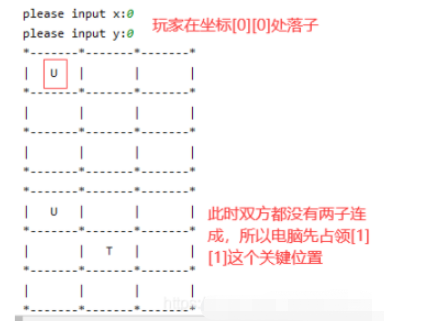
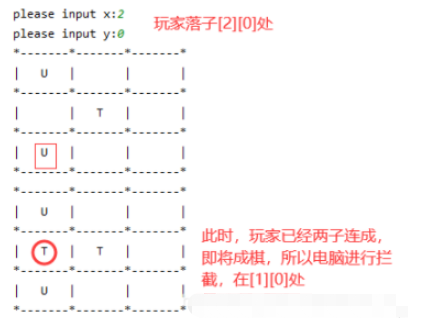
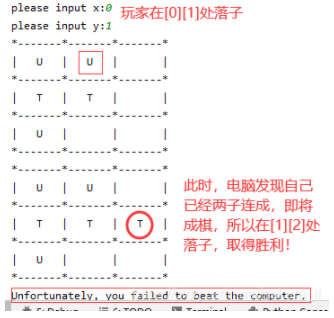
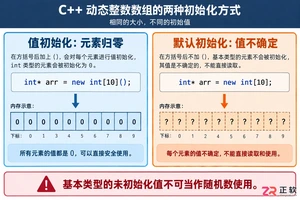
深入解析C++中动态数组的初始化机制,涵盖new操作符的不同用法、基本类型与类对象的初始化差异,以及为何在现代C++开发中应优先使用std::vector。
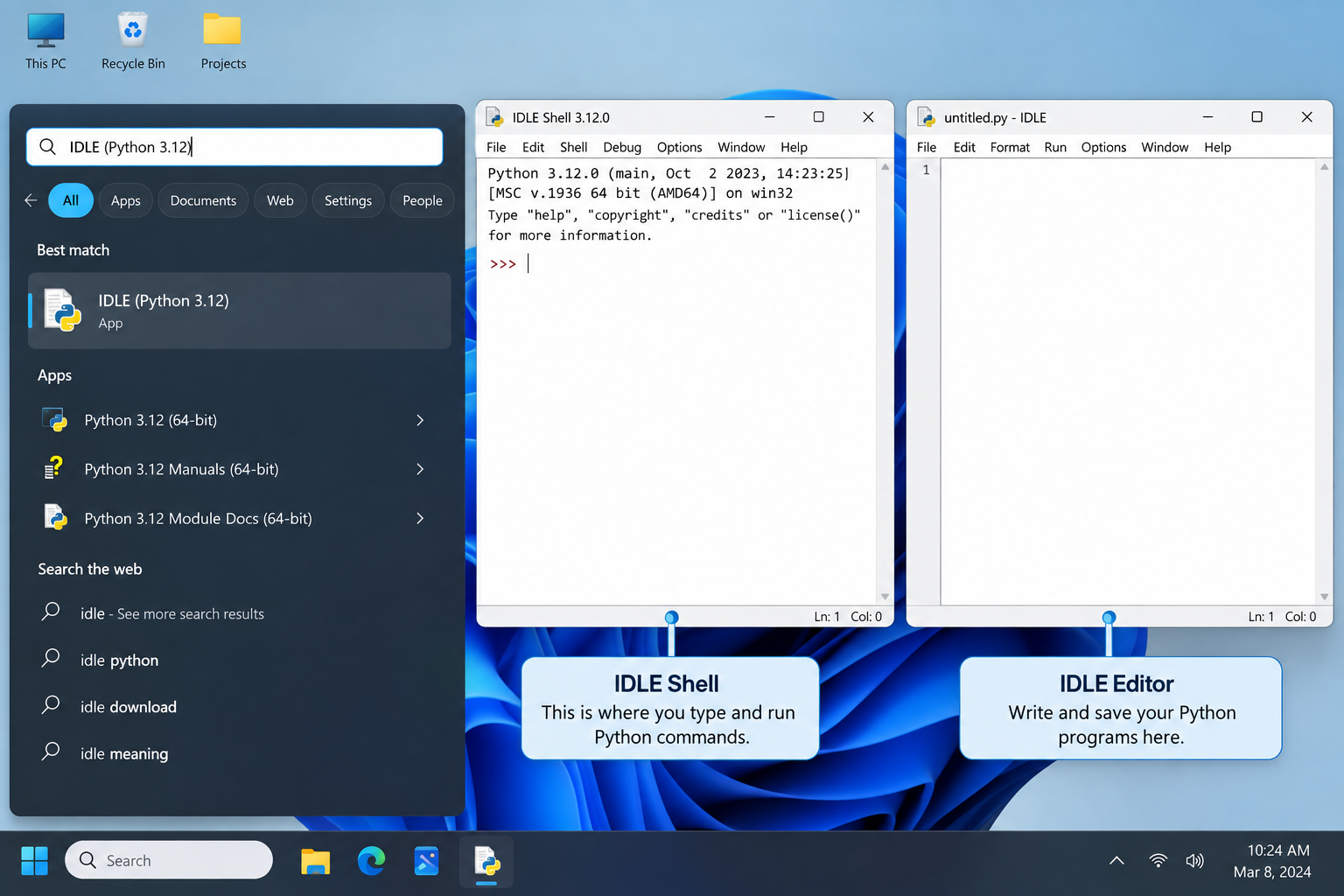
刚在Windows安装好Python却不知道如何启动?本文详细演示如何通过开始菜单找到并打开IDLE集成开发环境,以及如何在PowerShell或命令提示符中使用python和py命令启动交互式解释器、运行.py脚本文件。包含退出解释器的方法及常见启动问题排查,帮助初学者快速验证安装成功并开始编写代码。
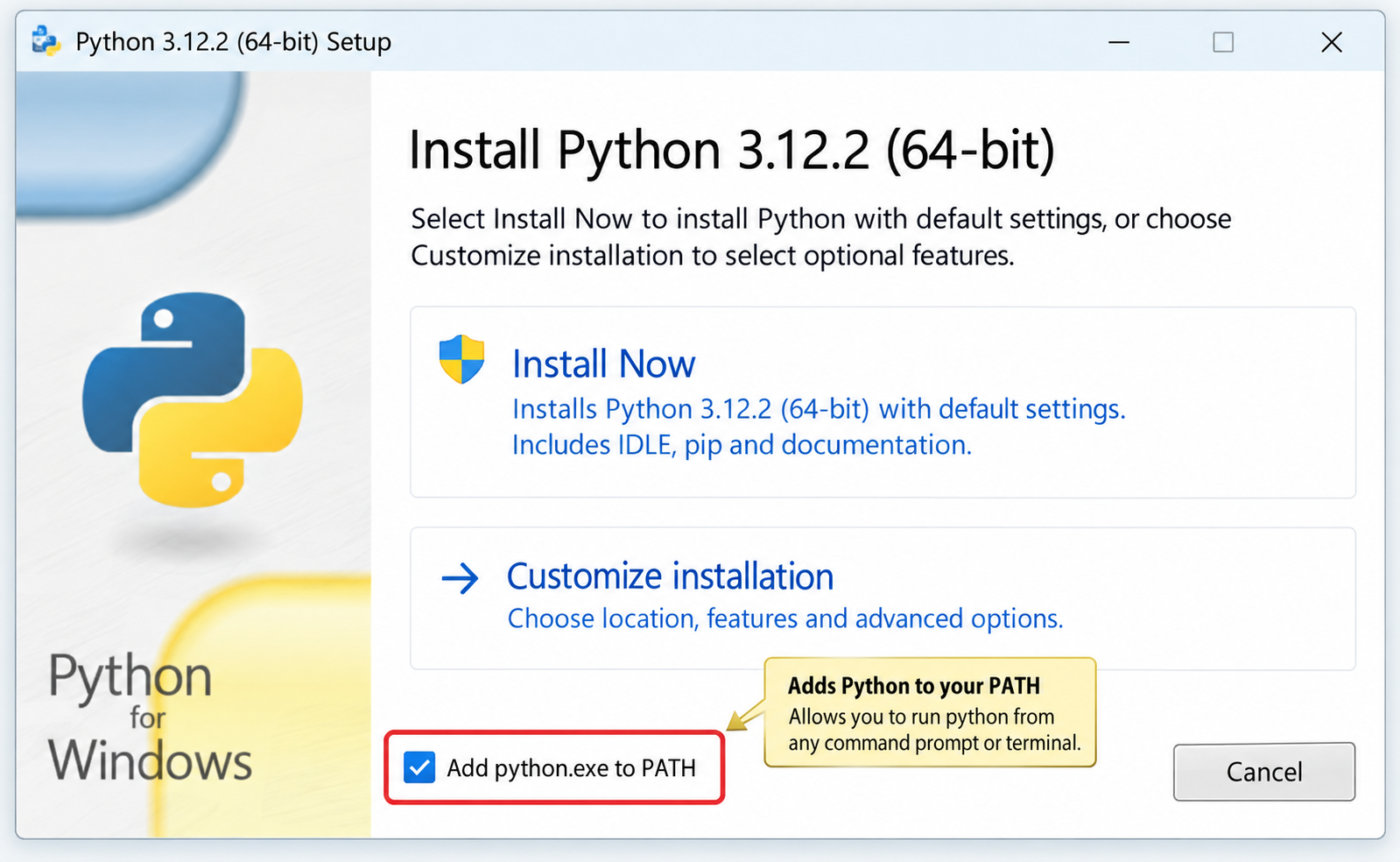
针对Windows初学者的Python安装实战指南。详细讲解如何从Python官网下载匹配架构的安装包,重点演示安装首屏勾选“Add python.exe to PATH”的关键操作,并提供使用python --version和py命令验证环境变量的具体步骤,帮助新手快速搭建开发环境并排查路径问题。

要想确认麒麟OS中Python程序的运行状态以及资源占用情况,我们可以这样做:用ps -ef | grep python来筛选进程;通过top命令,按P键排序查看实时负载;使用pgrep -f "script.py"精准获取PID;借助lsof -p PID验证文件打开状态。另外,还可以结合syst

在Debian系统上配置SSL证书通常涉及以下几个步骤:安装Web服务器:首先,你需要一个Web服务器,比如Apache或Nginx。这里以Apache为例。sudo apt updatesudo apt install apache2获取SSL证书:你可以从Let’s Encrypt免费获取SSL

要想让Python项目在统信UOS上正常运行,得先安装python3、python3-pip、python3-venv、python3-dev以及build-essential等组件。具体操作就是执行sudo apt install命令来一步到位完成安装,同时别忘了配置清华镜像源来给pip加速哦。在

在互联网上的各类网站中,无论大小,基本上都会有一个搜索框,用来给用户对内容进行搜索,小到站点搜索,大到搜索引擎搜索。从简单的来说,搜索功能确实很简单,一个简单的select语句就可以实现数据的搜索。而从复杂的来看,无论是搜索的精度还是搜索的效率,都是有很深的研究范围的。对于简单的搜索功能来说,一个s

立即在终端输入sudo shutdown -c取消倒计时关机,成功后显示“Shutdown cancelled”;若存在pmset重复任务,需再执行sudo pmset repeat cancel清除。Mac因Python脚本执行了os.system("sudo shutdown -h +10")或

之前写过一篇同步场景下用 Python 管理多个固定出口 IP 的实践(ExitPool + requests/httpx),覆盖了健康检查、故障转移和连接池复用。但在实际业务中,越来越多的场景用 asyncio 做高并发采集或批量接口调用——异步事件循环下多出口的管理方式和同步场景完全不同:单线程

写在前面:为什么静态出口 IP 不是"买了就行"不少团队在引入静态出口 IP 产品时,第一反应往往是:“地址配上去,这事就算完了。”可真到了真实业务里,静态出口 IP 真正能体现价值的地方,往往不在分配这一步,而在分配之后怎么管:地址有没有漂移,质量是否达标,某一条线路突然不可用时怎么切换,连接层又






Windows 10 是一款微软推出的经典操作系统,拥有硬件兼容性与多任务处理能力。它更偏向把系统状态查看和常用调节动作放在一起,适合需要持续观察和微调设备状态的场景。

极度公式是一款跨平台专业LaTeX公式识别编辑软件,支持OCR公式识别和多平台编辑。和使用说明,避免使用,享受完整功能与稳定支持。做扫描整理、文字提取和表格转换时,它能把识别后的处理步骤接得更顺,资料录入这类场景会省下不少时间。