

如何使用Python和C语言实现哈夫曼编码?
1.C语言实现1.1代码说明a创建双向链表:在创建哈夫曼树的过程中,需要不断对结点进行更改和删除,所以选用双向链表的结构更容易'''C#include#include#include//哈夫曼树结构体,数据域存储字符及其权重typedefstructnode{charc;intweight;structnode*lchild,*rchild;}Huffman,*Tree;//双向链表结构体,数据域存储哈夫曼树结点typedefstructlist{Treeroot;structli
1.C语言实现
1.1代码说明
a 创建双向链表:
在创建哈夫曼树的过程中,需要不断对结点进行更改和删除,所以选用双向链表的结构更容易
'''C #include#include #include //哈夫曼树结构体,数据域存储字符及其权重 typedef struct node { char c; int weight; struct node *lchild, *rchild; }Huffman, *Tree; //双向链表结构体,数据域存储哈夫曼树结点 typedef struct list { Tree root; struct list *pre; struct list *next; }List, *pList; //创建双向链表,返回头结点指针 pList creatList() { pList head = (pList)malloc(sizeof(List)); pList temp1 = head; pList temp2 = (pList)malloc(sizeof(List)); temp1->pre = NULL; temp1->next = temp2; temp1->root = (Tree)malloc(sizeof(Huffman)); temp1->root->c = 'a'; temp1->root->weight = 22; temp1->root->lchild = NULL; temp1->root->rchild = NULL; temp2->pre = temp1; temp1 = temp2; temp2 = (pList)malloc(sizeof(List)); temp1->next = temp2; temp1->root = (Tree)malloc(sizeof(Huffman)); temp1->root->c = 'b'; temp1->root->weight = 5; temp1->root->lchild = NULL; temp1->root->rchild = NULL; temp2->pre = temp1; temp1 = temp2; temp2 = (pList)malloc(sizeof(List)); temp1->next = temp2; temp1->root = (Tree)malloc(sizeof(Huffman)); temp1->root->c = 'c'; temp1->root->weight = 38; temp1->root->lchild = NULL; temp1->root->rchild = NULL; temp2->pre = temp1; temp1 = temp2; temp2 = (pList)malloc(sizeof(List)); temp1->next = temp2; temp1->root = (Tree)malloc(sizeof(Huffman)); temp1->root->c = 'd'; temp1->root->weight = 9; temp1->root->lchild = NULL; temp1->root->rchild = NULL; temp2->pre = temp1; temp1 = temp2; temp2 = (pList)malloc(sizeof(List)); temp1->next = temp2; temp1->root = (Tree)malloc(sizeof(Huffman)); temp1->root->c = 'e'; temp1->root->weight = 44; temp1->root->lchild = NULL; temp1->root->rchild = NULL; temp2->pre = temp1; temp1 = temp2; temp2 = (pList)malloc(sizeof(List)); temp1->next = temp2; temp1->root = (Tree)malloc(sizeof(Huffman)); temp1->root->c = 'f'; temp1->root->weight = 12; temp1->root->lchild = NULL; temp1->root->rchild = NULL; temp2->pre = temp1; temp1 = temp2; temp1->next = NULL; temp1->root = (Tree)malloc(sizeof(Huffman)); temp1->root->c = 'g'; temp1->root->weight = 65; temp1->root->lchild = NULL; temp1->root->rchild = NULL; return head; }
b创建栈结构:
解码过程需要用到两个栈,一个用来存放树结点,一个用来存放码0和1
'''C
#define STACK_INIT_SIZE 100   //栈初始开辟空间大小
#define STACK_INCREMENT 10    //栈追加空间大小

//字符栈结构体,存放编码'0'和'1'
typedef struct {
    char *base;
    char *top;
    int size;
}charStack;


//栈初始化
charStack charStackInit()
{
    charStack s;
    s.base = (char *)malloc(sizeof(char)*STACK_INIT_SIZE);
    s.top = s.base;
    s.size = STACK_INIT_SIZE;
    return s;
}

//入栈
void charPush(charStack *s, char e)
{
    if(s->top - s->base >= s->size)
    {
        s->size += STACK_INCREMENT;
        s->base = realloc(s->base, sizeof(char)*s->size);
    }
    *s->top = e;
    s->top++;
}

//出栈
char charPop(charStack *s)
{
    if(s->top != s->base)
    {
        s->top--;
        return *s->top;
    }
    return -1;
}

//得到栈顶元素,但不出栈
char charGetTop(charStack *s)
{
    s->top--;
    char temp = *s->top;
    s->top++;
    return temp;
}

//栈结构体,存放哈夫曼树结点
typedef struct
{
    Huffman *base;
    Huffman *top;
    int size;
}BiStack;

//栈初始化
BiStack stackInit()
{
    BiStack s;
    s.base = (Huffman *)malloc(sizeof(Huffman)*STACK_INIT_SIZE);
    s.top = s.base;
    s.size =STACK_INIT_SIZE;
    return s;
}

//入栈
void push(BiStack *s, Huffman e)
{
    if(s->top - s->base >= s->size)
    {
        s->size += STACK_INCREMENT;
        s->base = (Huffman *)realloc(s->base, sizeof(Huffman)*s->size);
    }
    *s->top = e;
    s->top++;
}

//出栈
Huffman pop(BiStack *s)
{
    Huffman temp;
    s->top--;
    temp = *s->top;
    return temp;
}

//得到栈顶元素,但不出栈
Huffman getTop(BiStack s)
{
    Huffman temp;
    s.top--;
    temp = *s.top;
    return temp;
}

char stack[7][10];             //记录a~g的编码
//遍历栈,得到字符c的编码
void traverseStack(charStack s, char c)
{
    int index = c - 'a';
    int i = 0;
    while(s.base != s.top)
    {
        stack[index][i] = *s.base;
        i++;
        s.base++;
    }
}
c 创建哈夫曼树:
'''C
//通过双向链表创建哈夫曼树,返回根结点指针
Tree creatHuffman(pList head)
{
    pList list1 = NULL;
    pList list2 = NULL;
    pList index = NULL;
    Tree root = NULL;
    while(head->next != NULL)   //链表只剩一个结点时循环结束,此结点数据域即为哈夫曼树的根结点
    {
        list1 = head;
        list2 = head->next;
        index = list2->next;
        root = (Tree)malloc(sizeof(Huffman));
        while(index != NULL)    //找到链表中权重最小的两个结点list1,list2
        {
            if(list1->root->weight > index->root->weight || list2->root->weight > index->root->weight)
            {
                if(list1->root->weight > list2->root->weight) list1 = index;
                else list2 = index;
            }
            index = index->next;
        }
        //list1和list2设为新结点的左右孩子
        if(list2->root->weight > list1->root->weight)
        {
            root->lchild = list1->root;
            root->rchild = list2->root;
        }
        else
        {
            root->lchild = list2->root;
            root->rchild = list1->root;
        }
        //新结点字符统一设为空格,权重设为list1与list2权重之和
        root->c = ' ';
        root->weight = list1->root->weight + list2->root->weight;
        //list1数据域替换成新结点,并删除list2
        list1->root = root;
        list2->pre->next = list2->next;
        if(list2->next != NULL)
            list2->next->pre = list2->pre;
    }
    return head->root;
}
d编码:
'''C
char stack[7][10];             //记录a~g的编码
//遍历栈,得到字符c的编码
void traverseStack(charStack s, char c)
{
    int index = c - 'a';
    int i = 0;
    while(s.base != s.top)
    {
        stack[index][i] = *s.base;
        i++;
        s.base++;
    }
}


//通过哈夫曼树编码
void encodeHuffman(Tree T)
{
    BiStack bs = stackInit();
    charStack cs = charStackInit();
    Huffman root = *T;
    Tree temp = NULL;
    push(&bs, root);      //根结点入栈
    while(bs.top != bs.base)      //栈空表示遍历结束
    {
        root = getTop(bs);
        temp = root.lchild;       //先访问左孩子
        while(temp != NULL)       //左孩子不为空
        {
            //将结点左孩子设为空,代表已访问其左孩子
            root.lchild = NULL;
            pop(&bs);
            push(&bs, root);
            //左孩子入栈
            root = *temp;
            temp = root.lchild;
            push(&bs, root);
            //'0'入字符栈
            charPush(&cs, '0');
        }
        temp = root.rchild;     //后访问右孩子
        while(temp == NULL)     //右孩子为空,代表左右孩子均已访问,结点可以出栈
        {
            //结点出栈
            root = pop(&bs);
            //寻到叶子结点,可以得到结点中字符的编码
            if(root.c != ' ')
                traverseStack(cs, root.c);
            charPop(&cs);       //字符栈出栈
            if(bs.top == bs.base) break;    //根结点出栈,遍历结束
            //查看上一级结点是否访问完左右孩子
            root = getTop(bs);
            temp = root.rchild;
        }
        if(bs.top != bs.base)
        {
            //将结点右孩子设为空,代表已访问其右孩子
            root.rchild = NULL;
            pop(&bs);
            push(&bs, root);
            //右孩子入栈
            root = *temp;
            push(&bs, root);
            //'1'入字符栈
            charPush(&cs, '1');
        }
    }
}
e解码:
'''C
char decode[100];   //记录解码得到的字符串
//通过哈夫曼树解码
void decodeHuffman(Tree T, char *code)
{
    int cnt = 0;
    Tree root;
    while(*code != '\0')                  //01编码字符串读完,解码结束
    {
        root = T;
        while(root->lchild != NULL)       //找到叶子结点
        {
            if(*code != '\0')
            {
                if(*code == '0')
                    root = root->lchild;
                else
                    root = root->rchild;
                code++;
            }
            else break;
        }
        decode[cnt] = root->c;             //叶子结点存放的字符即为解码得到的字符
        cnt++;
    }
}
f主函数:
'''C
void main()
{
    pList pl = creatList();
    printf("字符的权重如下\n");
    for(pList l = pl; l->next != NULL; l = l->next)
        printf("字符%c的权重是 %d\n", l->root->c, l->root->weight);
    Tree T = creatHuffman(pl);
    encodeHuffman(T);
    printf("\n\n字符编码结果如下\n");
    for(int i = 0; i < 7; i++)
        printf("%c : %s\n", i+'a', stack[i]);
    char code[100];
    printf("\n\n请输入编码:\n");
    scanf("%s", code);
    printf("解码结果如下:\n");
    decodeHuffman(T, code);
    printf("%s\n", decode);
    printf("\n\n");
    system("date /T");
    system("TIME /T");
    system("pause");
    exit(0);
}
1.2运行结果
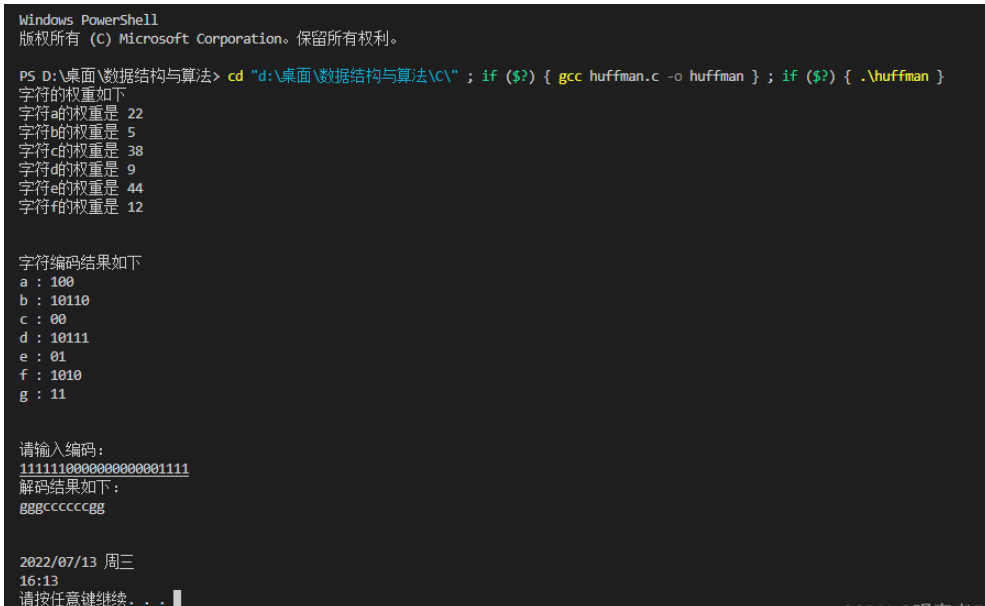
2.Python实现
2.1代码说明
a创建哈夫曼树:
#coding=gbk

import datetime
import time
from pip._vendor.distlib.compat import raw_input

#哈夫曼树结点类
class Huffman:
    def __init__(self, c, weight):
        self.c = c
        self.weight = weight
        self.lchild = None
        self.rchild = None

    #创建结点左右孩子
    def creat(self, lchild, rchild):
        self.lchild = lchild
        self.rchild = rchild

#创建列表
def creatList():
    list = []
    list.append(Huffman('a', 22))
    list.append(Huffman('b', 5))
    list.append(Huffman('c', 38))
    list.append(Huffman('d', 9))
    list.append(Huffman('e', 44))
    list.append(Huffman('f', 12))
    list.append(Huffman('g', 65))
    return list

#通过列表创建哈夫曼树,返回树的根结点
def creatHuffman(list):
    while len(list) > 1:               #列表只剩一个结点时循环结束,此结点即为哈夫曼树的根结点
        i = 0
        j = 1
        k = 2
        while k < len(list):           #找到列表中权重最小的两个结点list1,list2
            if list[i].weight > list[k].weight or list[j].weight > list[k].weight:
                if list[i].weight > list[j].weight:
                    i = k
                else:
                    j = k
            k += 1
        root = Huffman(' ', list[i].weight + list[j].weight) #新结点字符统一设为空格,权重设为list1与list2权重之和
        if list[i].weight < list[j].weight:                  #list1和list2设为新结点的左右孩子
            root.creat(list[i], list[j])
        else:
            root.creat(list[j], list[i])
        #list1数据域替换成新结点,并删除list2
        list[i] = root
        list.remove(list[j])
    return list[0]
b编码:
#通过哈夫曼树编码
def encodeHuffman(T):
    code = [[], [], [], [], [], [], []]
    #列表实现栈结构
    treeStack = []
    codeStack = []
    treeStack.append(T)
    while treeStack != []:        #栈空代表遍历结束
        root = treeStack[-1]
        temp = root.lchild
        while temp != None:
            #将结点左孩子设为空,代表已访问其左孩子
            root.lchild = None
            #左孩子入栈
            treeStack.append(temp)
            root = temp
            temp = root.lchild
            #0入编码栈
            codeStack.append(0)
        temp = root.rchild            #后访问右孩子
        while temp == None:           #右孩子为空,代表左右孩子均已访问,结点可以出栈
            root = treeStack.pop()           #结点出栈
            #寻到叶子结点,可以得到结点中字符的编码
            if root.c != ' ':
                codeTemp = codeStack.copy()
                code[ord(root.c) - 97] = codeTemp
            if treeStack == []:    #根结点出栈,遍历结束
                break
            codeStack.pop()        #编码栈出栈
            #查看上一级结点是否访问完左右孩子
            root = treeStack[-1]
            temp = root.rchild
        if treeStack != []:
            treeStack.append(temp)     #右孩子入栈
            root.rchild = None         #将结点右孩子设为空,代表已访问其右孩子
            codeStack.append(1)        #1入编码栈
    return code
c解码:
#通过哈夫曼树解码
def decodeHuffman(T, strCode):
    decode = []
    index = 0
    while index < len(strCode):        #01编码字符串读完,解码结束
        root = T
        while root.lchild != None:     #找到叶子结点
            if index < len(strCode):
                if strCode[index] == '0':
                    root = root.lchild
                else:
                    root = root.rchild
                index += 1
            else:
                break
        decode.append(root.c)           #叶子结点存放的字符即为解码得到的字符
    return decode
d主函数:
if __name__ == '__main__':
    list = creatList()
    print("字符的权重如下")
    for i in range(len(list)):
        print("字符{}的权重为: {}".format(chr(i+97), list[i].weight))
    T = creatHuffman(list)
    code = encodeHuffman(T)
    print("\n字符编码结果如下")
    for i in range(len(code)):
        print(chr(i+97), end=' : ')
        for j in range(len(code[i])):
            print(code[i][j], end='')
        print("")
    strCode = input("\n请输入编码:\n")
    #哈夫曼树在编码时被破坏,必须重建哈夫曼树
    list = creatList()
    T = creatHuffman(list)
    decode = decodeHuffman(T, strCode)
    print("解码结果如下:")
    for i in range(len(decode)):
        print(decode[i], end='')
    print("\n\n")
    datetime = datetime.datetime.now()
    print(datetime.strftime("%Y-%m-%d\n%H:%M:%S"))
    input("Press Enter to exit…")
2.2运行结果
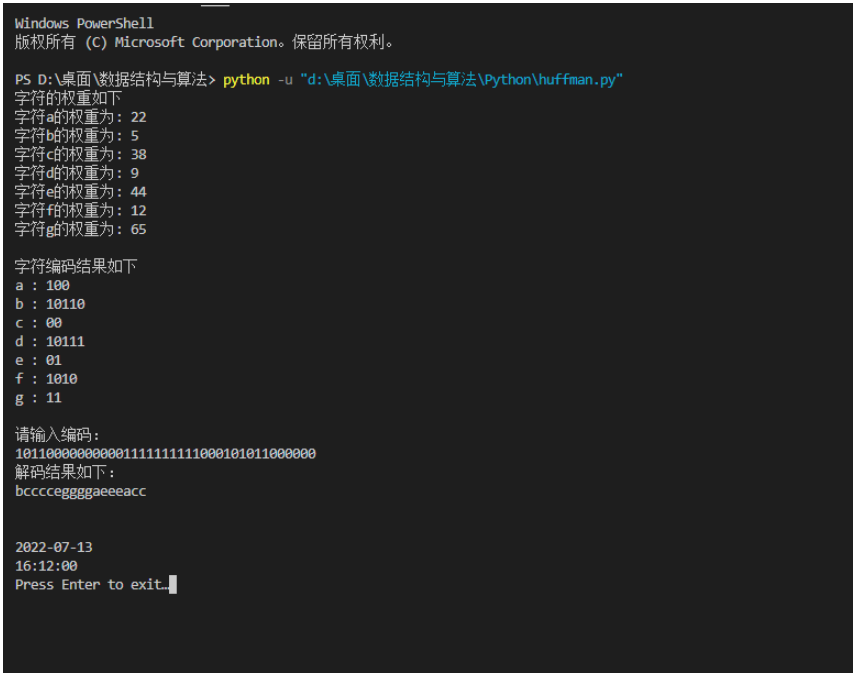
深入解析C++中动态数组的初始化机制,涵盖new操作符的不同用法、基本类型与类对象的初始化差异,以及为何在现代C++开发中应优先使用std::vector。
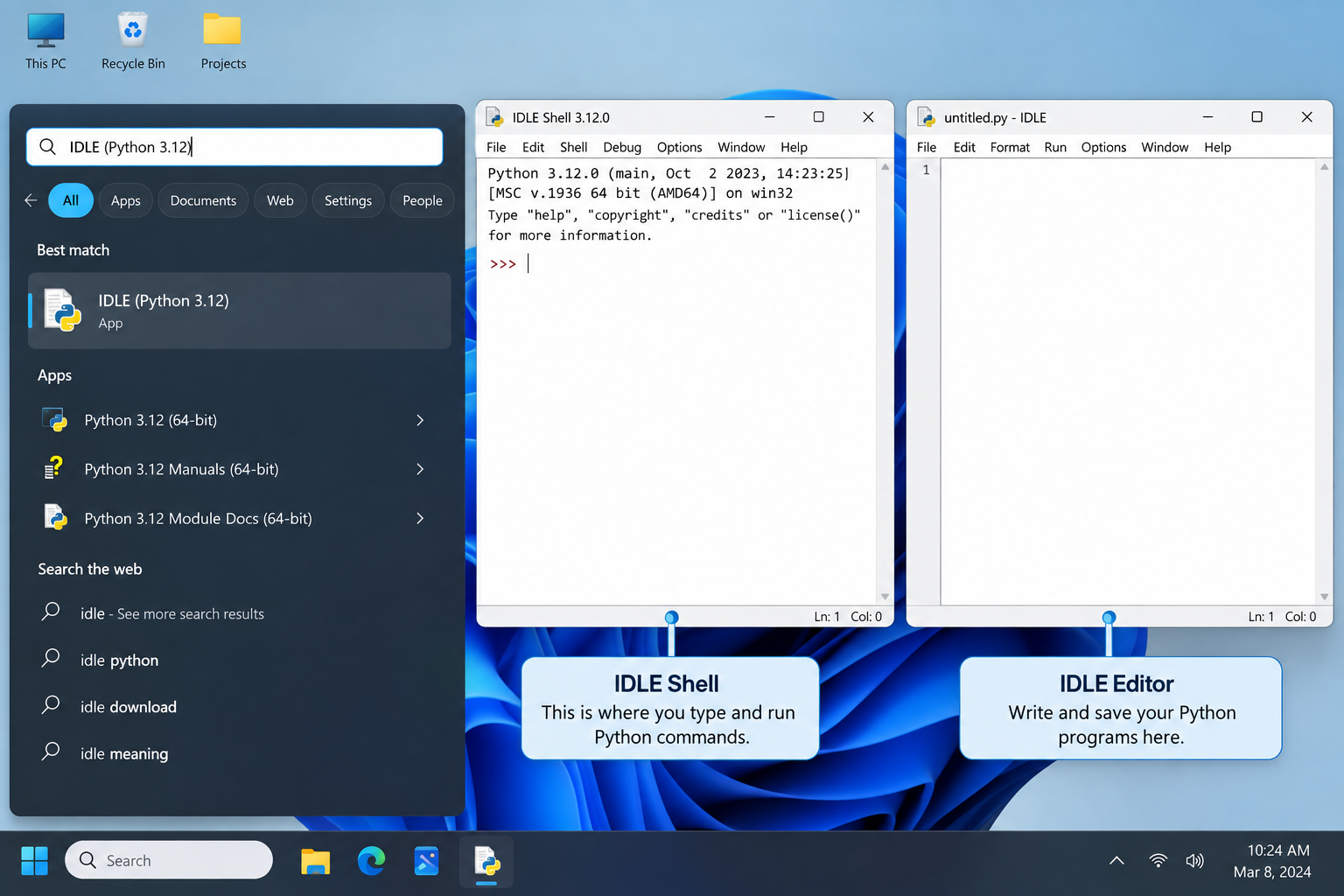
刚在Windows安装好Python却不知道如何启动?本文详细演示如何通过开始菜单找到并打开IDLE集成开发环境,以及如何在PowerShell或命令提示符中使用python和py命令启动交互式解释器、运行.py脚本文件。包含退出解释器的方法及常见启动问题排查,帮助初学者快速验证安装成功并开始编写代码。

针对Windows初学者的Python安装实战指南。详细讲解如何从Python官网下载匹配架构的安装包,重点演示安装首屏勾选“Add python.exe to PATH”的关键操作,并提供使用python --version和py命令验证环境变量的具体步骤,帮助新手快速搭建开发环境并排查路径问题。

要想确认麒麟OS中Python程序的运行状态以及资源占用情况,我们可以这样做:用ps -ef | grep python来筛选进程;通过top命令,按P键排序查看实时负载;使用pgrep -f "script.py"精准获取PID;借助lsof -p PID验证文件打开状态。另外,还可以结合syst

在Debian系统上配置SSL证书通常涉及以下几个步骤:安装Web服务器:首先,你需要一个Web服务器,比如Apache或Nginx。这里以Apache为例。sudo apt updatesudo apt install apache2获取SSL证书:你可以从Let’s Encrypt免费获取SSL

要想让Python项目在统信UOS上正常运行,得先安装python3、python3-pip、python3-venv、python3-dev以及build-essential等组件。具体操作就是执行sudo apt install命令来一步到位完成安装,同时别忘了配置清华镜像源来给pip加速哦。在

在互联网上的各类网站中,无论大小,基本上都会有一个搜索框,用来给用户对内容进行搜索,小到站点搜索,大到搜索引擎搜索。从简单的来说,搜索功能确实很简单,一个简单的select语句就可以实现数据的搜索。而从复杂的来看,无论是搜索的精度还是搜索的效率,都是有很深的研究范围的。对于简单的搜索功能来说,一个s

立即在终端输入sudo shutdown -c取消倒计时关机,成功后显示“Shutdown cancelled”;若存在pmset重复任务,需再执行sudo pmset repeat cancel清除。Mac因Python脚本执行了os.system("sudo shutdown -h +10")或

之前写过一篇同步场景下用 Python 管理多个固定出口 IP 的实践(ExitPool + requests/httpx),覆盖了健康检查、故障转移和连接池复用。但在实际业务中,越来越多的场景用 asyncio 做高并发采集或批量接口调用——异步事件循环下多出口的管理方式和同步场景完全不同:单线程

写在前面:为什么静态出口 IP 不是"买了就行"不少团队在引入静态出口 IP 产品时,第一反应往往是:“地址配上去,这事就算完了。”可真到了真实业务里,静态出口 IP 真正能体现价值的地方,往往不在分配这一步,而在分配之后怎么管:地址有没有漂移,质量是否达标,某一条线路突然不可用时怎么切换,连接层又






Windows 10 是一款微软推出的经典操作系统,拥有硬件兼容性与多任务处理能力。它更偏向把系统状态查看和常用调节动作放在一起,适合需要持续观察和微调设备状态的场景。

极度公式是一款跨平台专业LaTeX公式识别编辑软件,支持OCR公式识别和多平台编辑。和使用说明,避免使用,享受完整功能与稳定支持。做扫描整理、文字提取和表格转换时,它能把识别后的处理步骤接得更顺,资料录入这类场景会省下不少时间。