

如何解决Java8(291)之后禁用了TLS1.1,导致JDBC无法用SSL连接SqlServer2008的问题?
Java8-291之后,禁用了TLS1.1,使JDBC无法用SSL连接SqlServer2008怎么办,以下是解决办法修改java.security文件1.找到jre的java.security文件如果是jre,在{JAVA_HOME}/jre/lib/security中,比如????C:\ProgramFiles\Java\jre1.8.0_301\lib\security如果是Eclipse绿色免安装便携版在安装文件夹搜索java.security,比如????xxx\plugins\org.ecli
Java8-291之后 , 禁用了TLS1.1 , 使JDBC无法用SSL连接SqlServer2008怎么办,以下是解决办法
修改java.security文件
1.找到jre的java.security文件
如果是jre , 在 {JAVA_HOME} / jre / lib / security中, 比如????
C:\Program Files\Java\jre1.8.0_301\lib\security
如果是Eclipse绿色免安装便携版
在安装文件夹搜索java.security ,比如????
xxx\plugins\org.eclipse.justj.openjdk.hotspot.jre.full.win32.x86_64_16.0.1.v20210528-1205\jre\conf\security
如果是window下的安装版Eclipse
文件在c:/用户文件夹/.p2/pool/plugins/…中, 例如????
C:\Users\admin\.p2\pool\plugins\org.eclipse.justj.openjdk.hotspot.jre.full.win32.x86_64_16.0.2.v20210721-1149\jre\conf\security
如果在C盘搜索java.security,可能搜出两个以上,temp文件夹中也有
2.打开java.security并搜索 “jdk.tls.disabledAlgorithms=”
jdk.tls.disabledAlgorithms=
可找到????
# Example:
#   jdk.tls.disabledAlgorithms=MD5, SSLv3, DSA, RSA keySize < 2048, \
#       rsa_pkcs1_sha1, secp224r1
jdk.tls.disabledAlgorithms=SSLv3, TLSv1, TLSv1.1, RC4, DES, MD5withRSA, \
    DH keySize < 1024, EC keySize < 224, 3DES_EDE_CBC, anon, NULL
3.删掉TLSv1, TLSv1.1,
删掉后变为????
# Example:
#   jdk.tls.disabledAlgorithms=MD5, SSLv3, DSA, RSA keySize < 2048, \
#       rsa_pkcs1_sha1, secp224r1
jdk.tls.disabledAlgorithms=SSLv3,   RC4, DES, MD5withRSA, \
    DH keySize < 1024, EC keySize < 224, 3DES_EDE_CBC, anon, NULL
4.保存,可以了
修改后的样例,jre8可直接复制
已测试通过
#
# This is the "master security properties file".
#
# An alternate java.security properties file may be specified
# from the command line via the system property
#
# -Djava.security.properties=
#
# This properties file appends to the master security properties file.
# If both properties files specify values for the same key, the value
# from the command-line properties file is selected, as it is the last
# one loaded.
#
# Also, if you specify
#
# -Djava.security.properties==(2 equals),
#
# then that properties file completely overrides the master security
# properties file.
#
# To disable the ability to specify an additional properties file from
# the command line, set the key security.overridePropertiesFile
# to false in the master security properties file. It is set to true
# by default.# In this file, various security properties are set for use by
# java.security classes. This is where users can statically register
# Cryptography Package Providers ("providers" for short). The term
# "provider" refers to a package or set of packages that supply a
# concrete implementation of a subset of the cryptography aspects of
# the Java Security API. A provider may, for example, implement one or
# more digital signature algorithms or message digest algorithms.
#
# Each provider must implement a subclass of the Provider class.
# To register a provider in this master security properties file,
# specify the provider and priority in the format
#
# security.provider.=
#
# This declares a provider, and specifies its preference
# order n. The preference order is the order in which providers are
# searched for requested algorithms (when no specific provider is
# requested). The order is 1-based; 1 is the most preferred, followed
# by 2, and so on.
#
#must specify the name of the Provider as passed to its super
# class java.security.Provider constructor. This is for providers loaded
# through the ServiceLoader mechanism.
#
#must specify the subclass of the Provider class whose
# constructor sets the values of various properties that are required
# for the Java Security API to look up the algorithms or other
# facilities implemented by the provider. This is for providers loaded
# through classpath.
#
# Note: Providers can be dynamically registered instead by calls to
# either the addProvider or insertProviderAt method in the Security
# class.#
# List of providers and their preference orders (see above):
#
security.provider.1=SUN
security.provider.2=SunRsaSign
security.provider.3=SunEC
security.provider.4=SunJSSE
security.provider.5=SunJCE
security.provider.6=SunJGSS
security.provider.7=SunSASL
security.provider.8=XMLDSig
security.provider.9=SunPCSC
security.provider.10=JdkLDAP
security.provider.11=JdkSASL
security.provider.12=SunMSCAPI
security.provider.13=SunPKCS11#
# A list of preferred providers for specific algorithms. These providers will
# be searched for matching algorithms before the list of registered providers.
# Entries containing errors (parsing, etc) will be ignored. Use the
# -Djava.security.debug=jca property to debug these errors.
#
# The property is a comma-separated list of serviceType.algorithm:provider
# entries. The serviceType (example: "MessageDigest") is optional, and if
# not specified, the algorithm applies to all service types that support it.
# The algorithm is the standard algorithm name or transformation.
# Transformations can be specified in their full standard name
# (ex: AES/CBC/PKCS5Padding), or as partial matches (ex: AES, AES/CBC).
# The provider is the name of the provider. Any provider that does not
# also appear in the registered list will be ignored.
#
# There is a special serviceType for this property only to group a set of
# algorithms together. The type is "Group" and is followed by an algorithm
# keyword. Groups are to simplify and lessen the entries on the property
# line. Current groups are:
# Group.SHA2 = SHA-224, SHA-256, SHA-384, SHA-512, SHA-512/224, SHA-512/256
# Group.HmacSHA2 = HmacSHA224, HmacSHA256, HmacSHA384, HmacSHA512
# Group.SHA2RSA = SHA224withRSA, SHA256withRSA, SHA384withRSA, SHA512withRSA
# Group.SHA2DSA = SHA224withDSA, SHA256withDSA, SHA384withDSA, SHA512withDSA
# Group.SHA2ECDSA = SHA224withECDSA, SHA256withECDSA, SHA384withECDSA, \
# SHA512withECDSA
# Group.SHA3 = SHA3-224, SHA3-256, SHA3-384, SHA3-512
# Group.HmacSHA3 = HmacSHA3-224, HmacSHA3-256, HmacSHA3-384, HmacSHA3-512
#
# Example:
# jdk.security.provider.preferred=AES/GCM/NoPadding:SunJCE, \
# MessageDigest.SHA-256:SUN, Group.HmacSHA2:SunJCE
#
#jdk.security.provider.preferred=
#
# Sun Provider SecureRandom seed source.
#
# Select the primary source of seed data for the "NativePRNG", "SHA1PRNG"
# and "DRBG" SecureRandom implementations in the "Sun" provider.
# (Other SecureRandom implementations might also use this property.)
#
# On Unix-like systems (for example, Linux/MacOS), the
# "NativePRNG", "SHA1PRNG" and "DRBG" implementations obtains seed data from
# special device files such as file:/dev/random.
#
# On Windows systems, specifying the URLs "file:/dev/random" or
# "file:/dev/urandom" will enable the native Microsoft CryptoAPI seeding
# mechanism for SHA1PRNG and DRBG.
#
# By default, an attempt is made to use the entropy gathering device
# specified by the "securerandom.source" Security property. If an
# exception occurs while accessing the specified URL:
#
# NativePRNG:
# a default value of /dev/random will be used. If neither
# are available, the implementation will be disabled.
# "file" is the only currently supported protocol type.
#
# SHA1PRNG and DRBG:
# the traditional system/thread activity algorithm will be used.
#
# The entropy gathering device can also be specified with the System
# property "java.security.egd". For example:
#
# % java -Djava.security.egd=file:/dev/random MainClass
#
# Specifying this System property will override the
# "securerandom.source" Security property.
#
# In addition, if "file:/dev/random" or "file:/dev/urandom" is
# specified, the "NativePRNG" implementation will be more preferred than
# DRBG and SHA1PRNG in the Sun provider.
#
securerandom.source=file:/dev/random#
# A list of known strong SecureRandom implementations.
#
# To help guide applications in selecting a suitable strong
# java.security.SecureRandom implementation, Java distributions should
# indicate a list of known strong implementations using the property.
#
# This is a comma-separated list of algorithm and/or algorithm:provider
# entries.
#
securerandom.strongAlgorithms=Windows-PRNG:SunMSCAPI,DRBG:SUN#
# Sun provider DRBG configuration and default instantiation request.
#
# NIST SP 800-90Ar1 lists several DRBG mechanisms. Each can be configured
# with a DRBG algorithm name, and can be instantiated with a security strength,
# prediction resistance support, etc. This property defines the configuration
# and the default instantiation request of "DRBG" SecureRandom implementations
# in the SUN provider. (Other DRBG implementations can also use this property.)
# Applications can request different instantiation parameters like security
# strength, capability, personalization string using one of the
# getInstance(...,SecureRandomParameters,...) methods with a
# DrbgParameters.Instantiation argument, but other settings such as the
# mechanism and DRBG algorithm names are not currently configurable by any API.
#
# Please note that the SUN implementation of DRBG always supports reseeding.
#
# The value of this property is a comma-separated list of all configurable
# aspects. The aspects can appear in any order but the same aspect can only
# appear at most once. Its BNF-style definition is:
#
# Value:
# aspect { "," aspect }
#
# aspect:
# mech_name | algorithm_name | strength | capability | df
#
# // The DRBG mechanism to use. Default "Hash_DRBG"
# mech_name:
# "Hash_DRBG" | "HMAC_DRBG" | "CTR_DRBG"
#
# // The DRBG algorithm name. The "SHA-***" names are for Hash_DRBG and
# // HMAC_DRBG, default "SHA-256". The "AES-***" names are for CTR_DRBG,
# // default "AES-128" when using the limited cryptographic or "AES-256"
# // when using the unlimited.
# algorithm_name:
# "SHA-224" | "SHA-512/224" | "SHA-256" |
# "SHA-512/256" | "SHA-384" | "SHA-512" |
# "AES-128" | "AES-192" | "AES-256"
#
# // Security strength requested. Default "128"
# strength:
# "112" | "128" | "192" | "256"
#
# // Prediction resistance and reseeding request. Default "none"
# // "pr_and_reseed" - Both prediction resistance and reseeding
# // support requested
# // "reseed_only" - Only reseeding support requested
# // "none" - Neither prediction resistance not reseeding
# // support requested
# pr:
# "pr_and_reseed" | "reseed_only" | "none"
#
# // Whether a derivation function should be used. only applicable
# // to CTR_DRBG. Default "use_df"
# df:
# "use_df" | "no_df"
#
# Examples,
# securerandom.drbg.config=Hash_DRBG,SHA-224,112,none
# securerandom.drbg.config=CTR_DRBG,AES-256,192,pr_and_reseed,use_df
#
# The default value is an empty string, which is equivalent to
# securerandom.drbg.config=Hash_DRBG,SHA-256,128,none
#
securerandom.drbg.config=#
# Class to instantiate as the javax.security.auth.login.Configuration
# provider.
#
login.configuration.provider=sun.security.provider.ConfigFile#
# Default login configuration file
#
#login.config.url.1=file:${user.home}/.java.login.config#
# Class to instantiate as the system Policy. This is the name of the class
# that will be used as the Policy object. The system class loader is used to
# locate this class.
#
policy.provider=sun.security.provider.PolicyFile# The default is to have a single system-wide policy file,
# and a policy file in the user's home directory.
#
policy.url.1=file:${java.home}/conf/security/java.policy
policy.url.2=file:${user.home}/.java.policy# Controls whether or not properties are expanded in policy and login
# configuration files. If set to false, properties (${...}) will not
# be expanded in policy and login configuration files. If commented out or
# set to an empty string, the default value is "false" for policy files and
# "true" for login configuration files.
#
policy.expandProperties=true# Controls whether or not an extra policy or login configuration file is
# allowed to be passed on the command line with -Djava.security.policy=somefile
# or -Djava.security.auth.login.config=somefile. If commented out or set to
# an empty string, the default value is "false".
#
policy.allowSystemProperty=true# whether or not we look into the IdentityScope for trusted Identities
# when encountering a 1.1 signed JAR file. If the identity is found
# and is trusted, we grant it AllPermission. Note: the default policy
# provider (sun.security.provider.PolicyFile) does not support this property.
#
policy.ignoreIdentityScope=false#
# Default keystore type.
#
keystore.type=pkcs12#
# Controls compatibility mode for JKS and PKCS12 keystore types.
#
# When set to 'true', both JKS and PKCS12 keystore types support loading
# keystore files in either JKS or PKCS12 format. When set to 'false' the
# JKS keystore type supports loading only JKS keystore files and the PKCS12
# keystore type supports loading only PKCS12 keystore files.
#
keystore.type.compat=true#
# List of comma-separated packages that start with or equal this string
# will cause a security exception to be thrown when passed to the
# SecurityManager::checkPackageAccess method unless the corresponding
# RuntimePermission("accessClassInPackage."+package) has been granted.
#
package.access=sun.misc.,\
sun.reflect.#
# List of comma-separated packages that start with or equal this string
# will cause a security exception to be thrown when passed to the
# SecurityManager::checkPackageDefinition method unless the corresponding
# RuntimePermission("defineClassInPackage."+package) has been granted.
#
# By default, none of the class loaders supplied with the JDK call
# checkPackageDefinition.
#
package.definition=sun.misc.,\
sun.reflect.#
# Determines whether this properties file can be appended to
# or overridden on the command line via -Djava.security.properties
#
security.overridePropertiesFile=true#
# Determines the default key and trust manager factory algorithms for
# the javax.net.ssl package.
#
ssl.KeyManagerFactory.algorithm=SunX509
ssl.TrustManagerFactory.algorithm=PKIX#
# The Java-level namelookup cache policy for successful lookups:
#
# any negative value: caching forever
# any positive value: the number of seconds to cache an address for
# zero: do not cache
#
# default value is forever (FOREVER). For security reasons, this
# caching is made forever when a security manager is set. When a security
# manager is not set, the default behavior in this implementation
# is to cache for 30 seconds.
#
# NOTE: setting this to anything other than the default value can have
# serious security implications. Do not set it unless
# you are sure you are not exposed to DNS spoofing attack.
#
#networkaddress.cache.ttl=-1# The Java-level namelookup cache policy for failed lookups:
#
# any negative value: cache forever
# any positive value: the number of seconds to cache negative lookup results
# zero: do not cache
#
# In some Microsoft Windows networking environments that employ
# the WINS name service in addition to DNS, name service lookups
# that fail may take a noticeably long time to return (approx. 5 seconds).
# For this reason the default caching policy is to maintain these
# results for 10 seconds.
#
networkaddress.cache.negative.ttl=10#
# Properties to configure OCSP for certificate revocation checking
## Enable OCSP
#
# By default, OCSP is not used for certificate revocation checking.
# This property enables the use of OCSP when set to the value "true".
#
# NOTE: SocketPermission is required to connect to an OCSP responder.
#
# Example,
# ocsp.enable=true#
# Location of the OCSP responder
#
# By default, the location of the OCSP responder is determined implicitly
# from the certificate being validated. This property explicitly specifies
# the location of the OCSP responder. The property is used when the
# Authority Information Access extension (defined in RFC 5280) is absent
# from the certificate or when it requires overriding.
#
# Example,
# ocsp.responderURL=http://ocsp.example.net:80#
# Subject name of the OCSP responder's certificate
#
# By default, the certificate of the OCSP responder is that of the issuer
# of the certificate being validated. This property identifies the certificate
# of the OCSP responder when the default does not apply. Its value is a string
# distinguished name (defined in RFC 2253) which identifies a certificate in
# the set of certificates supplied during cert path validation. In cases where
# the subject name alone is not sufficient to uniquely identify the certificate
# then both the "ocsp.responderCertIssuerName" and
# "ocsp.responderCertSerialNumber" properties must be used instead. When this
# property is set then those two properties are ignored.
#
# Example,
# ocsp.responderCertSubjectName=CN=OCSP Responder, O=XYZ Corp#
# Issuer name of the OCSP responder's certificate
#
# By default, the certificate of the OCSP responder is that of the issuer
# of the certificate being validated. This property identifies the certificate
# of the OCSP responder when the default does not apply. Its value is a string
# distinguished name (defined in RFC 2253) which identifies a certificate in
# the set of certificates supplied during cert path validation. When this
# property is set then the "ocsp.responderCertSerialNumber" property must also
# be set. When the "ocsp.responderCertSubjectName" property is set then this
# property is ignored.
#
# Example,
# ocsp.responderCertIssuerName=CN=Enterprise CA, O=XYZ Corp#
# Serial number of the OCSP responder's certificate
#
# By default, the certificate of the OCSP responder is that of the issuer
# of the certificate being validated. This property identifies the certificate
# of the OCSP responder when the default does not apply. Its value is a string
# of hexadecimal digits (colon or space separators may be present) which
# identifies a certificate in the set of certificates supplied during cert path
# validation. When this property is set then the "ocsp.responderCertIssuerName"
# property must also be set. When the "ocsp.responderCertSubjectName" property
# is set then this property is ignored.
#
# Example,
# ocsp.responderCertSerialNumber=2A:FF:00#
# Policy for failed Kerberos KDC lookups:
#
# When a KDC is unavailable (network error, service failure, etc), it is
# put inside a blacklist and accessed less often for future requests. The
# value (case-insensitive) for this policy can be:
#
# tryLast
# KDCs in the blacklist are always tried after those not on the list.
#
# tryLess[:max_retries,timeout]
# KDCs in the blacklist are still tried by their order in the configuration,
# but with smaller max_retries and timeout values. max_retries and timeout
# are optional numerical parameters (default 1 and 5000, which means once
# and 5 seconds). Please notes that if any of the values defined here is
# more than what is defined in krb5.conf, it will be ignored.
#
# Whenever a KDC is detected as available, it is removed from the blacklist.
# The blacklist is reset when krb5.conf is reloaded. You can add
# refreshKrb5Config=true to a JAAS configuration file so that krb5.conf is
# reloaded whenever a JAAS authentication is attempted.
#
# Example,
# krb5.kdc.bad.policy = tryLast
# krb5.kdc.bad.policy = tryLess:2,2000
#
krb5.kdc.bad.policy = tryLast#
# Kerberos cross-realm referrals (RFC 6806)
#
# OpenJDK's Kerberos client supports cross-realm referrals as defined in
# RFC 6806. This allows to setup more dynamic environments in which clients
# do not need to know in advance how to reach the realm of a target principal
# (either a user or service).
#
# When a client issues an AS or a TGS request, the "canonicalize" option
# is set to announce support of this feature. A KDC server may fulfill the
# request or reply referring the client to a different one. If referred,
# the client will issue a new request and the cycle repeats.
#
# In addition to referrals, the "canonicalize" option allows the KDC server
# to change the client name in response to an AS request. For security reasons,
# RFC 6806 (section 11) FAST scheme is enforced.
#
# Disable Kerberos cross-realm referrals. Value may be overwritten with a
# System property (-Dsun.security.krb5.disableReferrals).
sun.security.krb5.disableReferrals=false# Maximum number of AS or TGS referrals to avoid infinite loops. Value may
# be overwritten with a System property (-Dsun.security.krb5.maxReferrals).
sun.security.krb5.maxReferrals=5#
# This property contains a list of disabled EC Named Curves that can be included
# in the jdk.[tls|certpath|jar].disabledAlgorithms properties. To include this
# list in any of the disabledAlgorithms properties, add the property name as
# an entry.
#jdk.disabled.namedCurves=#
# Algorithm restrictions for certification path (CertPath) processing
#
# In some environments, certain algorithms or key lengths may be undesirable
# for certification path building and validation. For example, "MD2" is
# generally no longer considered to be a secure hash algorithm. This section
# describes the mechanism for disabling algorithms based on algorithm name
# and/or key length. This includes algorithms used in certificates, as well
# as revocation information such as CRLs and signed OCSP Responses.
# The syntax of the disabled algorithm string is described as follows:
# DisabledAlgorithms:
# " DisabledAlgorithm { , DisabledAlgorithm } "
#
# DisabledAlgorithm:
# AlgorithmName [Constraint] { '&' Constraint } | IncludeProperty
#
# AlgorithmName:
# (see below)
#
# Constraint:
# KeySizeConstraint | CAConstraint | DenyAfterConstraint |
# UsageConstraint
#
# KeySizeConstraint:
# keySize Operator KeyLength
#
# Operator:
# <= | < | == | != | >= | >
#
# KeyLength:
# Integer value of the algorithm's key length in bits
#
# CAConstraint:
# jdkCA
#
# DenyAfterConstraint:
# denyAfter YYYY-MM-DD
#
# UsageConstraint:
# usage [TLSServer] [TLSClient] [SignedJAR]
#
# IncludeProperty:
# include
#
# The "AlgorithmName" is the standard algorithm name of the disabled
# algorithm. See the Java Security Standard Algorithm Names Specification
# for information about Standard Algorithm Names. Matching is
# performed using a case-insensitive sub-element matching rule. (For
# example, in "SHA1withECDSA" the sub-elements are "SHA1" for hashing and
# "ECDSA" for signatures.) If the assertion "AlgorithmName" is a
# sub-element of the certificate algorithm name, the algorithm will be
# rejected during certification path building and validation. For example,
# the assertion algorithm name "DSA" will disable all certificate algorithms
# that rely on DSA, such as NONEwithDSA, SHA1withDSA. However, the assertion
# will not disable algorithms related to "ECDSA".
#
# The "IncludeProperty" allows a implementation-defined security property that
# can be included in the disabledAlgorithms properties. These properties are
# to help manage common actions easier across multiple disabledAlgorithm
# properties.
# There is one defined security property: jdk.disabled.NamedCurves
# See the property for more specific details.
#
#
# A "Constraint" defines restrictions on the keys and/or certificates for
# a specified AlgorithmName:
#
# KeySizeConstraint:
# keySize Operator KeyLength
# The constraint requires a key of a valid size range if the
# "AlgorithmName" is of a key algorithm. The "KeyLength" indicates
# the key size specified in number of bits. For example,
# "RSA keySize <= 1024" indicates that any RSA key with key size less
# than or equal to 1024 bits should be disabled, and
# "RSA keySize < 1024, RSA keySize > 2048" indicates that any RSA key
# with key size less than 1024 or greater than 2048 should be disabled.
# This constraint is only used on algorithms that have a key size.
#
# CAConstraint:
# jdkCA
# This constraint prohibits the specified algorithm only if the
# algorithm is used in a certificate chain that terminates at a marked
# trust anchor in the lib/security/cacerts keystore. If the jdkCA
# constraint is not set, then all chains using the specified algorithm
# are restricted. jdkCA may only be used once in a DisabledAlgorithm
# expression.
# Example: To apply this constraint to SHA-1 certificates, include
# the following: "SHA1 jdkCA"
#
# DenyAfterConstraint:
# denyAfter YYYY-MM-DD
# This constraint prohibits a certificate with the specified algorithm
# from being used after the date regardless of the certificate's
# validity. JAR files that are signed and timestamped before the
# constraint date with certificates containing the disabled algorithm
# will not be restricted. The date is processed in the UTC timezone.
# This constraint can only be used once in a DisabledAlgorithm
# expression.
# Example: To deny usage of RSA 2048 bit certificates after Feb 3 2020,
# use the following: "RSA keySize == 2048 & denyAfter 2020-02-03"
#
# UsageConstraint:
# usage [TLSServer] [TLSClient] [SignedJAR]
# This constraint prohibits the specified algorithm for
# a specified usage. This should be used when disabling an algorithm
# for all usages is not practical. 'TLSServer' restricts the algorithm
# in TLS server certificate chains when server authentication is
# performed. 'TLSClient' restricts the algorithm in TLS client
# certificate chains when client authentication is performed.
# 'SignedJAR' constrains use of certificates in signed jar files.
# The usage type follows the keyword and more than one usage type can
# be specified with a whitespace delimiter.
# Example: "SHA1 usage TLSServer TLSClient"
#
# When an algorithm must satisfy more than one constraint, it must be
# delimited by an ampersand '&'. For example, to restrict certificates in a
# chain that terminate at a distribution provided trust anchor and contain
# RSA keys that are less than or equal to 1024 bits, add the following
# constraint: "RSA keySize <= 1024 & jdkCA".
#
# All DisabledAlgorithms expressions are processed in the order defined in the
# property. This requires lower keysize constraints to be specified
# before larger keysize constraints of the same algorithm. For example:
# "RSA keySize < 1024 & jdkCA, RSA keySize < 2048".
#
# Note: The algorithm restrictions do not apply to trust anchors or
# self-signed certificates.
#
# Note: This property is currently used by Oracle's PKIX implementation. It
# is not guaranteed to be examined and used by other implementations.
#
# Example:
# jdk.certpath.disabledAlgorithms=MD2, DSA, RSA keySize < 2048
#
#
jdk.certpath.disabledAlgorithms=MD2, MD5, SHA1 jdkCA & usage TLSServer, \
RSA keySize < 1024, DSA keySize < 1024, EC keySize < 224#
# Legacy algorithms for certification path (CertPath) processing and
# signed JAR files.
#
# In some environments, a certain algorithm or key length may be undesirable
# but is not yet disabled.
#
# Tools such as keytool and jarsigner may emit warnings when these legacy
# algorithms are used. See the man pages for those tools for more information.
#
# The syntax is the same as the "jdk.certpath.disabledAlgorithms" and
# "jdk.jar.disabledAlgorithms" security properties.
#
# Note: This property is currently used by the JDK Reference
# implementation. It is not guaranteed to be examined and used by other
# implementations.jdk.security.legacyAlgorithms=SHA1, \
RSA keySize < 2048, DSA keySize < 2048#
# Algorithm restrictions for signed JAR files
#
# In some environments, certain algorithms or key lengths may be undesirable
# for signed JAR validation. For example, "MD2" is generally no longer
# considered to be a secure hash algorithm. This section describes the
# mechanism for disabling algorithms based on algorithm name and/or key length.
# JARs signed with any of the disabled algorithms or key sizes will be treated
# as unsigned.
#
# The syntax of the disabled algorithm string is described as follows:
# DisabledAlgorithms:
# " DisabledAlgorithm { , DisabledAlgorithm } "
#
# DisabledAlgorithm:
# AlgorithmName [Constraint] { '&' Constraint }
#
# AlgorithmName:
# (see below)
#
# Constraint:
# KeySizeConstraint | DenyAfterConstraint
#
# KeySizeConstraint:
# keySize Operator KeyLength
#
# DenyAfterConstraint:
# denyAfter YYYY-MM-DD
#
# Operator:
# <= | < | == | != | >= | >
#
# KeyLength:
# Integer value of the algorithm's key length in bits
#
# Note: This property is currently used by the JDK Reference
# implementation. It is not guaranteed to be examined and used by other
# implementations.
#
# See "jdk.certpath.disabledAlgorithms" for syntax descriptions.
#
jdk.jar.disabledAlgorithms=MD2, MD5, RSA keySize < 1024, \
DSA keySize < 1024#
# Algorithm restrictions for Secure Socket Layer/Transport Layer Security
# (SSL/TLS/DTLS) processing
#
# In some environments, certain algorithms or key lengths may be undesirable
# when using SSL/TLS/DTLS. This section describes the mechanism for disabling
# algorithms during SSL/TLS/DTLS security parameters negotiation, including
# protocol version negotiation, cipher suites selection, named groups
# selection, signature schemes selection, peer authentication and key
# exchange mechanisms.
#
# Disabled algorithms will not be negotiated for SSL/TLS connections, even
# if they are enabled explicitly in an application.
#
# For PKI-based peer authentication and key exchange mechanisms, this list
# of disabled algorithms will also be checked during certification path
# building and validation, including algorithms used in certificates, as
# well as revocation information such as CRLs and signed OCSP Responses.
# This is in addition to the jdk.certpath.disabledAlgorithms property above.
#
# See the specification of "jdk.certpath.disabledAlgorithms" for the
# syntax of the disabled algorithm string.
#
# Note: The algorithm restrictions do not apply to trust anchors or
# self-signed certificates.
#
# Note: This property is currently used by the JDK Reference implementation.
# It is not guaranteed to be examined and used by other implementations.
#
# Example:
# jdk.tls.disabledAlgorithms=MD5, SSLv3, DSA, RSA keySize < 2048, \
# rsa_pkcs1_sha1, secp224r1
jdk.tls.disabledAlgorithms=SSLv3, RC4, DES, MD5withRSA, \
DH keySize < 1024, EC keySize < 224, 3DES_EDE_CBC, anon, NULL#
# Legacy algorithms for Secure Socket Layer/Transport Layer Security (SSL/TLS)
# processing in JSSE implementation.
#
# In some environments, a certain algorithm may be undesirable but it
# cannot be disabled because of its use in legacy applications. Legacy
# algorithms may still be supported, but applications should not use them
# as the security strength of legacy algorithms are usually not strong enough
# in practice.
#
# During SSL/TLS security parameters negotiation, legacy algorithms will
# not be negotiated unless there are no other candidates.
#
# The syntax of the legacy algorithms string is described as this Java
# BNF-style:
# LegacyAlgorithms:
# " LegacyAlgorithm { , LegacyAlgorithm } "
#
# LegacyAlgorithm:
# AlgorithmName (standard JSSE algorithm name)
#
# See the specification of security property "jdk.certpath.disabledAlgorithms"
# for the syntax and description of the "AlgorithmName" notation.
#
# Per SSL/TLS specifications, cipher suites have the form:
# SSL_KeyExchangeAlg_WITH_CipherAlg_MacAlg
# or
# TLS_KeyExchangeAlg_WITH_CipherAlg_MacAlg
#
# For example, the cipher suite TLS_RSA_WITH_AES_128_CBC_SHA uses RSA as the
# key exchange algorithm, AES_128_CBC (128 bits AES cipher algorithm in CBC
# mode) as the cipher (encryption) algorithm, and SHA-1 as the message digest
# algorithm for HMAC.
#
# The LegacyAlgorithm can be one of the following standard algorithm names:
# 1. JSSE cipher suite name, e.g., TLS_RSA_WITH_AES_128_CBC_SHA
# 2. JSSE key exchange algorithm name, e.g., RSA
# 3. JSSE cipher (encryption) algorithm name, e.g., AES_128_CBC
# 4. JSSE message digest algorithm name, e.g., SHA
#
# See SSL/TLS specifications and the Java Security Standard Algorithm Names
# Specification for information about the algorithm names.
#
# Note: If a legacy algorithm is also restricted through the
# jdk.tls.disabledAlgorithms property or the
# java.security.AlgorithmConstraints API (See
# javax.net.ssl.SSLParameters.setAlgorithmConstraints()),
# then the algorithm is completely disabled and will not be negotiated.
#
# Note: This property is currently used by the JDK Reference implementation.
# It is not guaranteed to be examined and used by other implementations.
# There is no guarantee the property will continue to exist or be of the
# same syntax in future releases.
#
# Example:
# jdk.tls.legacyAlgorithms=DH_anon, DES_CBC, SSL_RSA_WITH_RC4_128_MD5
#
jdk.tls.legacyAlgorithms=NULL, anon, RC4, DES, 3DES_EDE_CBC#
# The pre-defined default finite field Diffie-Hellman ephemeral (DHE)
# parameters for Transport Layer Security (SSL/TLS/DTLS) processing.
#
# In traditional SSL/TLS/DTLS connections where finite field DHE parameters
# negotiation mechanism is not used, the server offers the client group
# parameters, base generator g and prime modulus p, for DHE key exchange.
# It is recommended to use dynamic group parameters. This property defines
# a mechanism that allows you to specify custom group parameters.
#
# The syntax of this property string is described as this Java BNF-style:
# DefaultDHEParameters:
# DefinedDHEParameters { , DefinedDHEParameters }
#
# DefinedDHEParameters:
# "{" DHEPrimeModulus , DHEBaseGenerator "}"
#
# DHEPrimeModulus:
# HexadecimalDigits
#
# DHEBaseGenerator:
# HexadecimalDigits
#
# HexadecimalDigits:
# HexadecimalDigit { HexadecimalDigit }
#
# HexadecimalDigit: one of
# 0 1 2 3 4 5 6 7 8 9 A B C D E F a b c d e f
#
# Whitespace characters are ignored.
#
# The "DefinedDHEParameters" defines the custom group parameters, prime
# modulus p and base generator g, for a particular size of prime modulus p.
# The "DHEPrimeModulus" defines the hexadecimal prime modulus p, and the
# "DHEBaseGenerator" defines the hexadecimal base generator g of a group
# parameter. It is recommended to use safe primes for the custom group
# parameters.
#
# If this property is not defined or the value is empty, the underlying JSSE
# provider's default group parameter is used for each connection.
#
# If the property value does not follow the grammar, or a particular group
# parameter is not valid, the connection will fall back and use the
# underlying JSSE provider's default group parameter.
#
# Note: This property is currently used by OpenJDK's JSSE implementation. It
# is not guaranteed to be examined and used by other implementations.
#
# Example:
# jdk.tls.server.defaultDHEParameters=
# { \
# FFFFFFFF FFFFFFFF C90FDAA2 2168C234 C4C6628B 80DC1CD1 \
# 29024E08 8A67CC74 020BBEA6 3B139B22 514A0879 8E3404DD \
# EF9519B3 CD3A431B 302B0A6D F25F1437 4FE1356D 6D51C245 \
# E485B576 625E7EC6 F44C42E9 A637ED6B 0BFF5CB6 F406B7ED \
# EE386BFB 5A899FA5 AE9F2411 7C4B1FE6 49286651 ECE65381 \
# FFFFFFFF FFFFFFFF, 2}#
# TLS key limits on symmetric cryptographic algorithms
#
# This security property sets limits on algorithms key usage in TLS 1.3.
# When the amount of data encrypted exceeds the algorithm value listed below,
# a KeyUpdate message will trigger a key change. This is for symmetric ciphers
# with TLS 1.3 only.
#
# The syntax for the property is described below:
# KeyLimits:
# " KeyLimit { , KeyLimit } "
#
# WeakKeyLimit:
# AlgorithmName Action Length
#
# AlgorithmName:
# A full algorithm transformation.
#
# Action:
# KeyUpdate
#
# Length:
# The amount of encrypted data in a session before the Action occurs
# This value may be an integer value in bytes, or as a power of two, 2^29.
#
# KeyUpdate:
# The TLS 1.3 KeyUpdate handshake process begins when the Length amount
# is fulfilled.
#
# Note: This property is currently used by OpenJDK's JSSE implementation. It
# is not guaranteed to be examined and used by other implementations.
#
jdk.tls.keyLimits=AES/GCM/NoPadding KeyUpdate 2^37#
# Cryptographic Jurisdiction Policy defaults
#
# Import and export control rules on cryptographic software vary from
# country to country. By default, Java provides two different sets of
# cryptographic policy files[1]:
#
# unlimited: These policy files contain no restrictions on cryptographic
# strengths or algorithms
#
# limited: These policy files contain more restricted cryptographic
# strengths
#
# The default setting is determined by the value of the "crypto.policy"
# Security property below. If your country or usage requires the
# traditional restrictive policy, the "limited" Java cryptographic
# policy is still available and may be appropriate for your environment.
#
# If you have restrictions that do not fit either use case mentioned
# above, Java provides the capability to customize these policy files.
# The "crypto.policy" security property points to a subdirectory
# within/conf/security/policy/ which can be customized.
# Please see the/conf/security/policy/README.txt file or consult
# the Java Security Guide/JCA documentation for more information.
#
# YOU ARE ADVISED TO CONSULT YOUR EXPORT/IMPORT CONTROL COUNSEL OR ATTORNEY
# TO DETERMINE THE EXACT REQUIREMENTS.
#
# [1] Please note that the JCE for Java SE, including the JCE framework,
# cryptographic policy files, and standard JCE providers provided with
# the Java SE, have been reviewed and approved for export as mass market
# encryption item by the US Bureau of Industry and Security.
#
# Note: This property is currently used by the JDK Reference implementation.
# It is not guaranteed to be examined and used by other implementations.
#
crypto.policy=unlimited#
# The policy for the XML Signature secure validation mode. The mode is
# enabled by setting the property "org.jcp.xml.dsig.secureValidation" to
# true with the javax.xml.crypto.XMLCryptoContext.setProperty() method,
# or by running the code with a SecurityManager.
#
# Policy:
# Constraint {"," Constraint }
# Constraint:
# AlgConstraint | MaxTransformsConstraint | MaxReferencesConstraint |
# ReferenceUriSchemeConstraint | KeySizeConstraint | OtherConstraint
# AlgConstraint
# "disallowAlg" Uri
# MaxTransformsConstraint:
# "maxTransforms" Integer
# MaxReferencesConstraint:
# "maxReferences" Integer
# ReferenceUriSchemeConstraint:
# "disallowReferenceUriSchemes" String { String }
# KeySizeConstraint:
# "minKeySize" KeyAlg Integer
# OtherConstraint:
# "noDuplicateIds" | "noRetrievalMethodLoops"
#
# For AlgConstraint, Uri is the algorithm URI String that is not allowed.
# See the XML Signature Recommendation for more information on algorithm
# URI Identifiers. For KeySizeConstraint, KeyAlg is the standard algorithm
# name of the key type (ex: "RSA"). If the MaxTransformsConstraint,
# MaxReferencesConstraint or KeySizeConstraint (for the same key type) is
# specified more than once, only the last entry is enforced.
#
# Note: This property is currently used by the JDK Reference implementation. It
# is not guaranteed to be examined and used by other implementations.
#
jdk.xml.dsig.secureValidationPolicy=\
disallowAlg http://www.w3.org/TR/1999/REC-xslt-19991116,\
disallowAlg http://www.w3.org/2001/04/xmldsig-more#rsa-md5,\
disallowAlg http://www.w3.org/2001/04/xmldsig-more#hmac-md5,\
disallowAlg http://www.w3.org/2001/04/xmldsig-more#md5,\
maxTransforms 5,\
maxReferences 30,\
disallowReferenceUriSchemes file http https,\
minKeySize RSA 1024,\
minKeySize DSA 1024,\
minKeySize EC 224,\
noDuplicateIds,\
noRetrievalMethodLoops#
# Serialization system-wide filter
#
# A filter, if configured, is used by java.io.ObjectInputStream during
# deserialization to check the contents of the stream.
# A filter is configured as a sequence of patterns, each pattern is either
# matched against the name of a class in the stream or defines a limit.
# Patterns are separated by ";" (semicolon).
# Whitespace is significant and is considered part of the pattern.
#
# If the system property jdk.serialFilter is also specified, it supersedes
# the security property value defined here.
#
# If a pattern includes a "=", it sets a limit.
# If a limit appears more than once the last value is used.
# Limits are checked before classes regardless of the order in the
# sequence of patterns.
# If any of the limits are exceeded, the filter status is REJECTED.
#
# maxdepth=value - the maximum depth of a graph
# maxrefs=value - the maximum number of internal references
# maxbytes=value - the maximum number of bytes in the input stream
# maxarray=value - the maximum array length allowed
#
# Other patterns, from left to right, match the class or package name as
# returned from Class.getName.
# If the class is an array type, the class or package to be matched is the
# element type.
# Arrays of any number of dimensions are treated the same as the element type.
# For example, a pattern of "!example.Foo", rejects creation of any instance or
# array of example.Foo.
#
# If the pattern starts with "!", the status is REJECTED if the remaining
# pattern is matched; otherwise the status is ALLOWED if the pattern matches.
# If the pattern contains "/", the non-empty prefix up to the "/" is the
# module name;
# if the module name matches the module name of the class then
# the remaining pattern is matched with the class name.
# If there is no "/", the module name is not compared.
# If the pattern ends with ".**" it matches any class in the package and all
# subpackages.
# If the pattern ends with ".*" it matches any class in the package.
# If the pattern ends with "*", it matches any class with the pattern as a
# prefix.
# If the pattern is equal to the class name, it matches.
# Otherwise, the status is UNDECIDED.
#
#jdk.serialFilter=pattern;pattern#
# RMI Registry Serial Filter
#
# The filter pattern uses the same format as jdk.serialFilter.
# This filter can override the builtin filter if additional types need to be
# allowed or rejected from the RMI Registry or to decrease limits but not
# to increase limits.
# If the limits (maxdepth, maxrefs, or maxbytes) are exceeded, the object is rejected.
#
# Each non-array type is allowed or rejected if it matches one of the patterns,
# evaluated from left to right, and is otherwise allowed. Arrays of any
# component type, including subarrays and arrays of primitives, are allowed.
#
# Array construction of any component type, including subarrays and arrays of
# primitives, are allowed unless the length is greater than the maxarray limit.
# The filter is applied to each array element.
#
# Note: This property is currently used by the JDK Reference implementation.
# It is not guaranteed to be examined and used by other implementations.
#
# The built-in filter allows subclasses of allowed classes and
# can approximately be represented as the pattern:
#
#sun.rmi.registry.registryFilter=\
# maxarray=1000000;\
# maxdepth=20;\
# java.lang.String;\
# java.lang.Number;\
# java.lang.reflect.Proxy;\
# java.rmi.Remote;\
# sun.rmi.server.UnicastRef;\
# sun.rmi.server.RMIClientSocketFactory;\
# sun.rmi.server.RMIServerSocketFactory;\
# java.rmi.activation.ActivationID;\
# java.rmi.server.UID
#
# RMI Distributed Garbage Collector (DGC) Serial Filter
#
# The filter pattern uses the same format as jdk.serialFilter.
# This filter can override the builtin filter if additional types need to be
# allowed or rejected from the RMI DGC.
#
# Note: This property is currently used by the JDK Reference implementation.
# It is not guaranteed to be examined and used by other implementations.
#
# The builtin DGC filter can approximately be represented as the filter pattern:
#
#sun.rmi.transport.dgcFilter=\
# java.rmi.server.ObjID;\
# java.rmi.server.UID;\
# java.rmi.dgc.VMID;\
# java.rmi.dgc.Lease;\
# maxdepth=5;maxarray=10000#
# JCEKS Encrypted Key Serial Filter
#
# This filter, if configured, is used by the JCEKS KeyStore during the
# deserialization of the encrypted Key object stored inside a key entry.
# If not configured or the filter result is UNDECIDED (i.e. none of the patterns
# matches), the filter configured by jdk.serialFilter will be consulted.
#
# If the system property jceks.key.serialFilter is also specified, it supersedes
# the security property value defined here.
#
# The filter pattern uses the same format as jdk.serialFilter. The default
# pattern allows java.lang.Enum, java.security.KeyRep, java.security.KeyRep$Type,
# and javax.crypto.spec.SecretKeySpec and rejects all the others.
jceks.key.serialFilter = java.base/java.lang.Enum;java.base/java.security.KeyRep;\
java.base/java.security.KeyRep$Type;java.base/javax.crypto.spec.SecretKeySpec;!*# The iteration count used for password-based encryption (PBE) in JCEKS
# keystores. Values in the range 10000 to 5000000 are considered valid.
# If the value is out of this range, or is not a number, or is unspecified;
# a default of 200000 is used.
#
# If the system property jdk.jceks.iterationCount is also specified, it
# supersedes the security property value defined here.
#
#jdk.jceks.iterationCount = 200000#
# PKCS12 KeyStore properties
#
# The following properties, if configured, are used by the PKCS12 KeyStore
# implementation during the creation of a new keystore. Several of the
# properties may also be used when modifying an existing keystore. The
# properties can be overridden by a KeyStore API that specifies its own
# algorithms and parameters.
#
# If an existing PKCS12 keystore is loaded and then stored, the algorithm and
# parameter used to generate the existing Mac will be reused. If the existing
# keystore does not have a Mac, no Mac will be created while storing. If there
# is at least one certificate in the existing keystore, the algorithm and
# parameters used to encrypt the last certificate in the existing keystore will
# be reused to encrypt all certificates while storing. If the last certificate
# in the existing keystore is not encrypted, all certificates will be stored
# unencrypted. If there is no certificate in the existing keystore, any newly
# added certificate will be encrypted (or stored unencrypted if algorithm
# value is "NONE") using the "keystore.pkcs12.certProtectionAlgorithm" and
# "keystore.pkcs12.certPbeIterationCount" values defined here. Existing private
# and secret key(s) are not changed. Newly set private and secret key(s) will
# be encrypted using the "keystore.pkcs12.keyProtectionAlgorithm" and
# "keystore.pkcs12.keyPbeIterationCount" values defined here.
#
# In order to apply new algorithms and parameters to all entries in an
# existing keystore, one can create a new keystore and add entries in the
# existing keystore into the new keystore. This can be achieved by calling the
# "keytool -importkeystore" command.
#
# If a system property of the same name is also specified, it supersedes the
# security property value defined here.
#
# If the property is set to an illegal value,
# an iteration count that is not a positive integer, or an unknown algorithm
# name, an exception will be thrown when the property is used.
# If the property is not set or empty, a default value will be used.
#
# Note: These properties are currently used by the JDK Reference implementation.
# They are not guaranteed to be examined and used by other implementations.# The algorithm used to encrypt a certificate. This can be any non-Hmac PBE
# algorithm defined in the Cipher section of the Java Security Standard
# Algorithm Names Specification. When set to "NONE", the certificate
# is not encrypted. The default value is "PBEWithHmacSHA256AndAES_256".
#keystore.pkcs12.certProtectionAlgorithm = PBEWithHmacSHA256AndAES_256# The iteration count used by the PBE algorithm when encrypting a certificate.
# This value must be a positive integer. The default value is 10000.
#keystore.pkcs12.certPbeIterationCount = 10000# The algorithm used to encrypt a private key or secret key. This can be
# any non-Hmac PBE algorithm defined in the Cipher section of the Java
# Security Standard Algorithm Names Specification. The value must not be "NONE".
# The default value is "PBEWithHmacSHA256AndAES_256".
#keystore.pkcs12.keyProtectionAlgorithm = PBEWithHmacSHA256AndAES_256# The iteration count used by the PBE algorithm when encrypting a private key
# or a secret key. This value must be a positive integer. The default value
# is 10000.
#keystore.pkcs12.keyPbeIterationCount = 10000# The algorithm used to calculate the optional MacData at the end of a PKCS12
# file. This can be any HmacPBE algorithm defined in the Mac section of the
# Java Security Standard Algorithm Names Specification. When set to "NONE",
# no Mac is generated. The default value is "HmacPBESHA256".
#keystore.pkcs12.macAlgorithm = HmacPBESHA256# The iteration count used by the MacData algorithm. This value must be a
# positive integer. The default value is 10000.
#keystore.pkcs12.macIterationCount = 10000#
# Enhanced exception message information
#
# By default, exception messages should not include potentially sensitive
# information such as file names, host names, or port numbers. This property
# accepts one or more comma separated values, each of which represents a
# category of enhanced exception message information to enable. Values are
# case-insensitive. Leading and trailing whitespaces, surrounding each value,
# are ignored. Unknown values are ignored.
#
# NOTE: Use caution before setting this property. Setting this property
# exposes sensitive information in Exceptions, which could, for example,
# propagate to untrusted code or be emitted in stack traces that are
# inadvertently disclosed and made accessible over a public network.
#
# The categories are:
#
# hostInfo - IOExceptions thrown by java.net.Socket and the socket types in the
# java.nio.channels package will contain enhanced exception
# message information
#
# jar - enables more detailed information in the IOExceptions thrown
# by classes in the java.util.jar package
#
# The property setting in this file can be overridden by a system property of
# the same name, with the same syntax and possible values.
#
#jdk.includeInExceptions=hostInfo,jar#
# Disabled mechanisms for the Simple Authentication and Security Layer (SASL)
#
# Disabled mechanisms will not be negotiated by both SASL clients and servers.
# These mechanisms will be ignored if they are specified in the "mechanisms"
# argument of "Sasl.createSaslClient" or the "mechanism" argument of
# "Sasl.createSaslServer".
#
# The value of this property is a comma-separated list of SASL mechanisms.
# The mechanisms are case-sensitive. Whitespaces around the commas are ignored.
#
# Note: This property is currently used by the JDK Reference implementation.
# It is not guaranteed to be examined and used by other implementations.
#
# Example:
# jdk.sasl.disabledMechanisms=PLAIN, CRAM-MD5, DIGEST-MD5
jdk.sasl.disabledMechanisms=#
# Policies for distrusting Certificate Authorities (CAs).
#
# This is a comma separated value of one or more case-sensitive strings, each
# of which represents a policy for determining if a CA should be distrusted.
# The supported values are:
#
# SYMANTEC_TLS : Distrust TLS Server certificates anchored by a Symantec
# root CA and issued after April 16, 2019 unless issued by one of the
# following subordinate CAs which have a later distrust date:
# 1. Apple IST CA 2 - G1, SHA-256 fingerprint:
# AC2B922ECFD5E01711772FEA8ED372DE9D1E2245FCE3F57A9CDBEC77296A424B
# Distrust after December 31, 2019.
# 2. Apple IST CA 8 - G1, SHA-256 fingerprint:
# A4FE7C7F15155F3F0AEF7AAA83CF6E06DEB97CA3F909DF920AC1490882D488ED
# Distrust after December 31, 2019.
#
# Leading and trailing whitespace surrounding each value are ignored.
# Unknown values are ignored. If the property is commented out or set to the
# empty String, no policies are enforced.
#
# Note: This property is currently used by the JDK Reference implementation.
# It is not guaranteed to be supported by other SE implementations. Also, this
# property does not override other security properties which can restrict
# certificates such as jdk.tls.disabledAlgorithms or
# jdk.certpath.disabledAlgorithms; those restrictions are still enforced even
# if this property is not enabled.
#
jdk.security.caDistrustPolicies=SYMANTEC_TLS#
# FilePermission path canonicalization
#
# This security property dictates how the path argument is processed and stored
# while constructing a FilePermission object. If the value is set to true, the
# path argument is canonicalized and FilePermission methods (such as implies,
# equals, and hashCode) are implemented based on this canonicalized result.
# Otherwise, the path argument is not canonicalized and FilePermission methods are
# implemented based on the original input. See the implementation note of the
# FilePermission class for more details.
#
# If a system property of the same name is also specified, it supersedes the
# security property value defined here.
#
# The default value for this property is false.
#
jdk.io.permissionsUseCanonicalPath=false#
# Policies for the proxy_impersonator Kerberos ccache configuration entry
#
# The proxy_impersonator ccache configuration entry indicates that the ccache
# is a synthetic delegated credential for use with S4U2Proxy by an intermediate
# server. The ccache file should also contain the TGT of this server and
# an evidence ticket from the default principal of the ccache to this server.
#
# This security property determines how Java uses this configuration entry.
# There are 3 possible values:
#
# no-impersonate - Ignore this configuration entry, and always act as
# the owner of the TGT (if it exists).
#
# try-impersonate - Try impersonation when this configuration entry exists.
# If no matching TGT or evidence ticket is found,
# fallback to no-impersonate.
#
# always-impersonate - Always impersonate when this configuration entry exists.
# If no matching TGT or evidence ticket is found,
# no initial credential is read from the ccache.
#
# The default value is "always-impersonate".
#
# If a system property of the same name is also specified, it supersedes the
# security property value defined here.
#
#jdk.security.krb5.default.initiate.credential=always-impersonate#
# Trust Anchor Certificates - CA Basic Constraint check
#
# X.509 v3 certificates used as Trust Anchors (to validate signed code or TLS
# connections) must have the cA Basic Constraint field set to 'true'. Also, if
# they include a Key Usage extension, the keyCertSign bit must be set. These
# checks, enabled by default, can be disabled for backward-compatibility
# purposes with the jdk.security.allowNonCaAnchor System and Security
# properties. In the case that both properties are simultaneously set, the
# System value prevails. The default value of the property is "false".
#
#jdk.security.allowNonCaAnchor=true#
# The default Character set name (java.nio.charset.Charset.forName())
# for converting TLS ALPN values between byte arrays and Strings.
# Prior versions of the JDK may use UTF-8 as the default charset. If
# you experience interoperability issues, setting this property to UTF-8
# may help.
#
# jdk.tls.alpnCharset=UTF-8
jdk.tls.alpnCharset=ISO_8859_1#
# JNDI Object Factories Filter
#
# This filter is used by the JNDI runtime to control the set of object factory classes
# which will be allowed to instantiate objects from object references returned by
# naming/directory systems. The factory class named by the reference instance will be
# matched against this filter. The filter property supports pattern-based filter syntax
# with the same format as jdk.serialFilter.
#
# Each pattern is matched against the factory class name to allow or disallow it's
# instantiation. The access to a factory class is allowed unless the filter returns
# REJECTED.
#
# Note: This property is currently used by the JDK Reference implementation.
# It is not guaranteed to be examined and used by other implementations.
#
# If the system property jdk.jndi.object.factoriesFilter is also specified, it supersedes
# the security property value defined here. The default value of the property is "*".
#
# The default pattern value allows any object factory class specified by the reference
# instance to recreate the referenced object.
#jdk.jndi.object.factoriesFilter=*
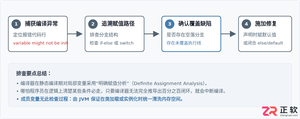
深入解析Java中局部变量未初始化编译报错与成员变量自动赋予默认值的机制差异,涵盖JVM内存分配、编译期确定性赋值检查与实际排查修复方案。
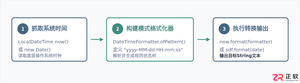
详细讲解在Java中获取当前系统时间并进行格式化输出的两种核心方案:基于Java 8全新日期时间API的DateTimeFormatter与传统遗留的SimpleDateFormat,包含完整代码示例、线程安全机制对比及生产选型建议。
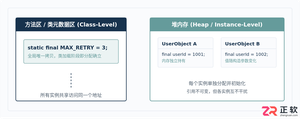
深入解析Java中final变量与static final常量的定义、内存语义、初始化时机及合法赋值路径,涵盖编译期常量优化与实战避坑指南。
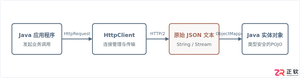
本文提供Java标准库HttpClient发起HTTP GET/POST请求并结合Jackson进行JSON数据反序列化与序列化的完整代码示例与工程实践指南。
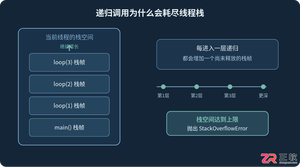
详细分析Java递归调用出现StackOverflowError的原因,结合代码说明线程栈、栈帧和递归深度之间的关系,并介绍终止条件排查、迭代改写、减少栈帧开销以及通过-Xss调整JVM栈空间的方法。
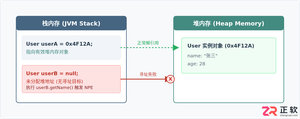
针对Java中常见的NullPointerException(NPE),本文从堆栈日志定位、典型代码触发场景、具体修复代码对比到防御体系进行系统讲解,提供实用且易上手的排查与修复方案。
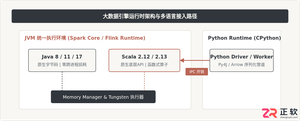
针对大数据工程场景,系统对比Java、Scala与Python在执行性能、生态结合、开发效率和维护成本上的核心差异,给出清晰的架构选型依据与落地方案。





火山引擎是字节跳动旗下企业级云与AI服务平台。聚焦大模型核心能力,依托字节自研豆包多模态大模型,凭借火山方舟一站式平台,提供模型精调、推理部署、智能应用搭建等全链路服务,结合高性能AI算力,助力各行业快速落地大模型数字化与智能化应用。