

下面介绍以Python为基础的深度学习TensorFlow参数初始化器initializer的方法
所有初始化方法定义#Copyright2015TheTensorFlowAuthors.AllRightsReserved.##LicensedundertheApacheLicense,Version2.0(the"License");#youmaynotusethisfileexceptincompliancewiththeLicense.#YoumayobtainacopyoftheLicenseat##http://www.apache.org/licenses/LICENSE-2.0##Unle
所有初始化方法定义
# Copyright 2015 The TensorFlow Authors. All Rights Reserved.
#
# Licensed under the Apache License, Version 2.0 (the "License");
# you may not use this file except in compliance with the License.
# You may obtain a copy of the License at
#
#     http://www.apache.org/licenses/LICENSE-2.0
#
# Unless required by applicable law or agreed to in writing, software
# distributed under the License is distributed on an "AS IS" BASIS,
# WITHOUT WARRANTIES OR CONDITIONS OF ANY KIND, either express or implied.
# See the License for the specific language governing permissions and
# limitations under the License.
# ==============================================================================
"""Operations often used for initializing tensors.
All variable initializers returned by functions in this file should have the
following signature:
def _initializer(shape, dtype=dtypes.float32, partition_info=None):
  Args:
    shape: List of `int` representing the shape of the output `Tensor`. Some
      initializers may also be able to accept a `Tensor`.
    dtype: (Optional) Type of the output `Tensor`.
    partition_info: (Optional) variable_scope._PartitionInfo object holding
      additional information about how the variable is partitioned. May be
      `None` if the variable is not partitioned.
  Returns:
    A `Tensor` of type `dtype` and `shape`.
"""
from __future__ import absolute_import
from __future__ import division
from __future__ import print_function
import math
from tensorflow.python.framework import constant_op
from tensorflow.python.framework import dtypes
from tensorflow.python.ops import array_ops
from tensorflow.python.ops import linalg_ops
from tensorflow.python.ops import random_ops
class Initializer(object):
  """Initializer base class: all initializers inherit from this class.
  """
  def __call__(self, shape, dtype=None, partition_info=None):
    raise NotImplementedError
class Zeros(Initializer):
  """Initializer that generates tensors initialized to 0."""
  def __init__(self, dtype=dtypes.float32):
    self.dtype = dtype
  def __call__(self, shape, dtype=None, partition_info=None):
    if dtype is None:
      dtype = self.dtype
    return constant_op.constant(False if dtype is dtypes.bool else 0,
                                dtype=dtype, shape=shape)
class Ones(Initializer):
  """Initializer that generates tensors initialized to 1."""
  def __init__(self, dtype=dtypes.float32):
    self.dtype = dtype
  def __call__(self, shape, dtype=None, partition_info=None):
    if dtype is None:
      dtype = self.dtype
    return constant_op.constant(1, dtype=dtype, shape=shape)
class Constant(Initializer):
  """Initializer that generates tensors with constant values.
  The resulting tensor is populated with values of type `dtype`, as
  specified by arguments `value` following the desired `shape` of the
  new tensor (see examples below).
  The argument `value` can be a constant value, or a list of values of type
  `dtype`. If `value` is a list, then the length of the list must be less
  than or equal to the number of elements implied by the desired shape of the
  tensor. In the case where the total number of elements in `value` is less
  than the number of elements required by the tensor shape, the last element
  in `value` will be used to fill the remaining entries. If the total number of
  elements in `value` is greater than the number of elements required by the
  tensor shape, the initializer will raise a `ValueError`.
  Args:
    value: A Python scalar, list of values, or a N-dimensional numpy array. All
      elements of the initialized variable will be set to the corresponding
      value in the `value` argument.
    dtype: The data type.
    verify_shape: Boolean that enables verification of the shape of `value`. If
      `True`, the initializer will throw an error if the shape of `value` is not
      compatible with the shape of the initialized tensor.
  Examples:
    The following example can be rewritten using a numpy.ndarray instead
    of the `value` list, even reshaped, as shown in the two commented lines
    below the `value` list initialization.
  ```python
    >>> import numpy as np
    >>> import tensorflow as tf
    >>> value = [0, 1, 2, 3, 4, 5, 6, 7]
    >>> # value = np.array(value)
    >>> # value = value.reshape([2, 4])
    >>> init = tf.constant_initializer(value)
    >>> print('fitting shape:')
    >>> with tf.Session():
    >>>   x = tf.get_variable('x', shape=[2, 4], initializer=init)
    >>>   x.initializer.run()
    >>>   print(x.eval())
    fitting shape:
    [[ 0.  1.  2.  3.]
     [ 4.  5.  6.  7.]]
    >>> print('larger shape:')
    >>> with tf.Session():
    >>>   x = tf.get_variable('x', shape=[3, 4], initializer=init)
    >>>   x.initializer.run()
    >>>   print(x.eval())
    larger shape:
    [[ 0.  1.  2.  3.]
     [ 4.  5.  6.  7.]
     [ 7.  7.  7.  7.]]
    >>> print('smaller shape:')
    >>> with tf.Session():
    >>>   x = tf.get_variable('x', shape=[2, 3], initializer=init)
    ValueError: Too many elements provided. Needed at most 6, but received 8
    >>> print('shape verification:')
    >>> init_verify = tf.constant_initializer(value, verify_shape=True)
    >>> with tf.Session():
    >>>   x = tf.get_variable('x', shape=[3, 4], initializer=init_verify)
    TypeError: Expected Tensor's shape: (3, 4), got (8,).
  ```
  """
  def __init__(self, value=0, dtype=dtypes.float32, verify_shape=False):
    self.value = value
    self.dtype = dtype
    self.verify_shape = verify_shape
  def __call__(self, shape, dtype=None, partition_info=None):
    if dtype is None:
      dtype = self.dtype
    return constant_op.constant(self.value, dtype=dtype, shape=shape,
                                verify_shape=self.verify_shape)
class RandomUniform(Initializer):
  """Initializer that generates tensors with a uniform distribution.
  Args:
    minval: A python scalar or a scalar tensor. Lower bound of the range
      of random values to generate.
    maxval: A python scalar or a scalar tensor. Upper bound of the range
      of random values to generate.  Defaults to 1 for float types.
    seed: A Python integer. Used to create random seeds. See
      @{tf.set_random_seed}
      for behavior.
    dtype: The data type.
  """
  def __init__(self, minval=0, maxval=None, seed=None, dtype=dtypes.float32):
    self.minval = minval
    self.maxval = maxval
    self.seed = seed
    self.dtype = dtype
  def __call__(self, shape, dtype=None, partition_info=None):
    if dtype is None:
      dtype = self.dtype
    return random_ops.random_uniform(shape, self.minval, self.maxval,
                                     dtype, seed=self.seed)
class RandomNormal(Initializer):
  """Initializer that generates tensors with a normal distribution.
  Args:
    mean: a python scalar or a scalar tensor. Mean of the random values
      to generate.
    stddev: a python scalar or a scalar tensor. Standard deviation of the
      random values to generate.
    seed: A Python integer. Used to create random seeds. See
      @{tf.set_random_seed}
      for behavior.
    dtype: The data type. Only floating point types are supported.
  """
  def __init__(self, mean=0.0, stddev=1.0, seed=None, dtype=dtypes.float32):
    self.mean = mean
    self.stddev = stddev
    self.seed = seed
    self.dtype = _assert_float_dtype(dtype)
  def __call__(self, shape, dtype=None, partition_info=None):
    if dtype is None:
      dtype = self.dtype
    return random_ops.random_normal(shape, self.mean, self.stddev,
                                    dtype, seed=self.seed)
class TruncatedNormal(Initializer):
  """Initializer that generates a truncated normal distribution.
  These values are similar to values from a `random_normal_initializer`
  except that values more than two standard deviations from the mean
  are discarded and re-drawn. This is the recommended initializer for
  neural network weights and filters.
  Args:
    mean: a python scalar or a scalar tensor. Mean of the random values
      to generate.
    stddev: a python scalar or a scalar tensor. Standard deviation of the
      random values to generate.
    seed: A Python integer. Used to create random seeds. See
      @{tf.set_random_seed}
      for behavior.
    dtype: The data type. Only floating point types are supported.
  """
  def __init__(self, mean=0.0, stddev=1.0, seed=None, dtype=dtypes.float32):
    self.mean = mean
    self.stddev = stddev
    self.seed = seed
    self.dtype = _assert_float_dtype(dtype)
  def __call__(self, shape, dtype=None, partition_info=None):
    if dtype is None:
      dtype = self.dtype
    return random_ops.truncated_normal(shape, self.mean, self.stddev,
                                       dtype, seed=self.seed)
class UniformUnitScaling(Initializer):
  """Initializer that generates tensors without scaling variance.
  When initializing a deep network, it is in principle advantageous to keep
  the scale of the input variance constant, so it does not explode or diminish
  by reaching the final layer. If the input is `x` and the operation `x * W`,
  and we want to initialize `W` uniformly at random, we need to pick `W` from
      [-sqrt(3) / sqrt(dim), sqrt(3) / sqrt(dim)]
  to keep the scale intact, where `dim = W.shape[0]` (the size of the input).
  A similar calculation for convolutional networks gives an analogous result
  with `dim` equal to the product of the first 3 dimensions.  When
  nonlinearities are present, we need to multiply this by a constant `factor`.
  See [Sussillo et al., 2014](https://arxiv.org/abs/1412.6558)
  ([pdf](http://arxiv.org/pdf/1412.6558.pdf)) for deeper motivation, experiments
  and the calculation of constants. In section 2.3 there, the constants were
  numerically computed: for a linear layer it's 1.0, relu: ~1.43, tanh: ~1.15.
  Args:
    factor: Float.  A multiplicative factor by which the values will be scaled.
    seed: A Python integer. Used to create random seeds. See
      @{tf.set_random_seed}
      for behavior.
    dtype: The data type. Only floating point types are supported.
  """
  def __init__(self, factor=1.0, seed=None, dtype=dtypes.float32):
    self.factor = factor
    self.seed = seed
    self.dtype = _assert_float_dtype(dtype)
  def __call__(self, shape, dtype=None, partition_info=None):
    if dtype is None:
      dtype = self.dtype
    scale_shape = shape
    if partition_info is not None:
      scale_shape = partition_info.full_shape
    input_size = 1.0
    # Estimating input size is not possible to do perfectly, but we try.
    # The estimate, obtained by multiplying all dimensions but the last one,
    # is the right thing for matrix multiply and convolutions (see above).
    for dim in scale_shape[:-1]:
      input_size *= float(dim)
    # Avoid errors when initializing zero-size tensors.
    input_size = max(input_size, 1.0)
    max_val = math.sqrt(3 / input_size) * self.factor
    return random_ops.random_uniform(shape, -max_val, max_val,
                                     dtype, seed=self.seed)
class VarianceScaling(Initializer):
  """Initializer capable of adapting its scale to the shape of weights tensors.
  With `distribution="normal"`, samples are drawn from a truncated normal
  distribution centered on zero, with `stddev = sqrt(scale / n)`
  where n is:
    - number of input units in the weight tensor, if mode = "fan_in"
    - number of output units, if mode = "fan_out"
    - average of the numbers of input and output units, if mode = "fan_avg"
  With `distribution="uniform"`, samples are drawn from a uniform distribution
  within [-limit, limit], with `limit = sqrt(3 * scale / n)`.
  Arguments:
    scale: Scaling factor (positive float).
    mode: One of "fan_in", "fan_out", "fan_avg".
    distribution: Random distribution to use. One of "normal", "uniform".
    seed: A Python integer. Used to create random seeds. See
      @{tf.set_random_seed}
      for behavior.
    dtype: The data type. Only floating point types are supported.
  Raises:
    ValueError: In case of an invalid value for the "scale", mode" or
      "distribution" arguments.
  """
  def __init__(self, scale=1.0,
               mode="fan_in",
               distribution="normal",
               seed=None,
               dtype=dtypes.float32):
    if scale <= 0.:
      raise ValueError("`scale` must be positive float.")
    if mode not in {"fan_in", "fan_out", "fan_avg"}:
      raise ValueError("Invalid `mode` argument:", mode)
    distribution = distribution.lower()
    if distribution not in {"normal", "uniform"}:
      raise ValueError("Invalid `distribution` argument:", distribution)
    self.scale = scale
    self.mode = mode
    self.distribution = distribution
    self.seed = seed
    self.dtype = _assert_float_dtype(dtype)
  def __call__(self, shape, dtype=None, partition_info=None):
    if dtype is None:
      dtype = self.dtype
    scale = self.scale
    scale_shape = shape
    if partition_info is not None:
      scale_shape = partition_info.full_shape
    fan_in, fan_out = _compute_fans(scale_shape)
    if self.mode == "fan_in":
      scale /= max(1., fan_in)
    elif self.mode == "fan_out":
      scale /= max(1., fan_out)
    else:
      scale /= max(1., (fan_in + fan_out) / 2.)
    if self.distribution == "normal":
      stddev = math.sqrt(scale)
      return random_ops.truncated_normal(shape, 0.0, stddev,
                                         dtype, seed=self.seed)
    else:
      limit = math.sqrt(3.0 * scale)
      return random_ops.random_uniform(shape, -limit, limit,
                                       dtype, seed=self.seed)
class Orthogonal(Initializer):
  """Initializer that generates an orthogonal matrix.
  If the shape of the tensor to initialize is two-dimensional, i is initialized
  with an orthogonal matrix obtained from the singular value decomposition of a
  matrix of uniform random numbers.
  If the shape of the tensor to initialize is more than two-dimensional,
  a matrix of shape `(shape[0] * ... * shape[n - 2], shape[n - 1])`
  is initialized, where `n` is the length of the shape vector.
  The matrix is subsequently reshaped to give a tensor of the desired shape.
  Args:
    gain: multiplicative factor to apply to the orthogonal matrix
    dtype: The type of the output.
    seed: A Python integer. Used to create random seeds. See
      @{tf.set_random_seed}
      for behavior.
  """
  def __init__(self, gain=1.0, dtype=dtypes.float32, seed=None):
    self.gain = gain
    self.dtype = _assert_float_dtype(dtype)
    self.seed = seed
  def __call__(self, shape, dtype=None, partition_info=None):
    if dtype is None:
      dtype = self.dtype
    # Check the shape
    if len(shape) < 2:
      raise ValueError("The tensor to initialize must be "
                       "at least two-dimensional")
    # Flatten the input shape with the last dimension remaining
    # its original shape so it works for conv2d
    num_rows = 1
    for dim in shape[:-1]:
      num_rows *= dim
    num_cols = shape[-1]
    flat_shape = (num_rows, num_cols)
    # Generate a random matrix
    a = random_ops.random_uniform(flat_shape, dtype=dtype, seed=self.seed)
    # Compute the svd
    _, u, v = linalg_ops.svd(a, full_matrices=False)
    # Pick the appropriate singular value decomposition
    if num_rows > num_cols:
      q = u
    else:
      # Tensorflow departs from numpy conventions
      # such that we need to transpose axes here
      q = array_ops.transpose(v)
    return self.gain * array_ops.reshape(q, shape)
# Aliases.
# pylint: disable=invalid-name
zeros_initializer = Zeros
ones_initializer = Ones
constant_initializer = Constant
random_uniform_initializer = RandomUniform
random_normal_initializer = RandomNormal
truncated_normal_initializer = TruncatedNormal
uniform_unit_scaling_initializer = UniformUnitScaling
variance_scaling_initializer = VarianceScaling
orthogonal_initializer = Orthogonal
# pylint: enable=invalid-name
def glorot_uniform_initializer(seed=None, dtype=dtypes.float32):
  """The Glorot uniform initializer, also called Xavier uniform initializer.
  It draws samples from a uniform distribution within [-limit, limit]
  where `limit` is `sqrt(6 / (fan_in + fan_out))`
  where `fan_in` is the number of input units in the weight tensor
  and `fan_out` is the number of output units in the weight tensor.
  Reference: http://jmlr.org/proceedings/papers/v9/glorot10a/glorot10a.pdf
  Arguments:
    seed: A Python integer. Used to create random seeds. See
      @{tf.set_random_seed}
      for behavior.
    dtype: The data type. Only floating point types are supported.
  Returns:
    An initializer.
  """
  return variance_scaling_initializer(scale=1.0,
                                      mode="fan_avg",
                                      distribution="uniform",
                                      seed=seed,
                                      dtype=dtype)
def glorot_normal_initializer(seed=None, dtype=dtypes.float32):
  """The Glorot normal initializer, also called Xavier normal initializer.
  It draws samples from a truncated normal distribution centered on 0
  with `stddev = sqrt(2 / (fan_in + fan_out))`
  where `fan_in` is the number of input units in the weight tensor
  and `fan_out` is the number of output units in the weight tensor.
  Reference: http://jmlr.org/proceedings/papers/v9/glorot10a/glorot10a.pdf
  Arguments:
    seed: A Python integer. Used to create random seeds. See
      @{tf.set_random_seed}
      for behavior.
    dtype: The data type. Only floating point types are supported.
  Returns:
    An initializer.
  """
  return variance_scaling_initializer(scale=1.0,
                                      mode="fan_avg",
                                      distribution="normal",
                                      seed=seed,
                                      dtype=dtype)
# Utility functions.
def _compute_fans(shape):
  """Computes the number of input and output units for a weight shape.
  Arguments:
    shape: Integer shape tuple or TF tensor shape.
  Returns:
    A tuple of scalars (fan_in, fan_out).
  """
  if len(shape) < 1:  # Just to avoid errors for constants.
    fan_in = fan_out = 1
  elif len(shape) == 1:
    fan_in = fan_out = shape[0]
  elif len(shape) == 2:
    fan_in = shape[0]
    fan_out = shape[1]
  else:
    # Assuming convolution kernels (2D, 3D, or more).
    # kernel shape: (..., input_depth, depth)
    receptive_field_size = 1.
    for dim in shape[:-2]:
      receptive_field_size *= dim
    fan_in = shape[-2] * receptive_field_size
    fan_out = shape[-1] * receptive_field_size
  return fan_in, fan_out
def _assert_float_dtype(dtype):
  """Validate and return floating point type based on `dtype`.
  `dtype` must be a floating point type.
  Args:
    dtype: The data type to validate.
  Returns:
    Validated type.
  Raises:
    ValueError: if `dtype` is not a floating point type.
  """
  if not dtype.is_floating:
    raise ValueError("Expected floating point type, got %s." % dtype)
  return dtype
1、tf.constant_initializer()
也可以简写为tf.Constant()
初始化为常数,这个非常有用,通常偏置项就是用它初始化的。
由它衍生出的两个初始化方法:
a、 tf.zeros_initializer(), 也可以简写为tf.Zeros()
b、tf.ones_initializer(), 也可以简写为tf.Ones()
例:在卷积层中,将偏置项b初始化为0,则有多种写法:
conv1 = tf.layers.conv2d(batch_images,
                         filters=64,
                         kernel_size=7,
                         strides=2,
                         activation=tf.nn.relu,
                         kernel_initializer=tf.TruncatedNormal(stddev=0.01)
                         bias_initializer=tf.Constant(0),
                        )
或者:
bias_initializer=tf.constant_initializer(0)
或者:
bias_initializer=tf.zeros_initializer()
或者:
bias_initializer=tf.Zeros()
例:如何将W初始化成拉普拉斯算子?
value = [1, 1, 1, 1, -8, 1, 1, 1,1]
init = tf.constant_initializer(value)
W= tf.get_variable('W', shape=[3, 3], initializer=init)
2、tf.truncated_normal_initializer()
或者简写为tf.TruncatedNormal()
生成截断正态分布的随机数,这个初始化方法好像在tf中用得比较多。
它有四个参数(mean=0.0, stddev=1.0, seed=None, dtype=dtypes.float32),分别用于指定均值、标准差、随机数种子和随机数的数据类型,一般只需要设置stddev这一个参数就可以了。
例:
conv1 = tf.layers.conv2d(batch_images,
                         filters=64,
                         kernel_size=7,
                         strides=2,
                         activation=tf.nn.relu,
                         kernel_initializer=tf.TruncatedNormal(stddev=0.01)
                         bias_initializer=tf.Constant(0),
                        )
或者:
conv1 = tf.layers.conv2d(batch_images,
                         filters=64,
                         kernel_size=7,
                         strides=2,
                         activation=tf.nn.relu,
                         kernel_initializer=tf.truncated_normal_initializer(stddev=0.01)
                         bias_initializer=tf.zero_initializer(),
                        )
3、tf.random_normal_initializer()
可简写为 tf.RandomNormal()
生成标准正态分布的随机数,参数和truncated_normal_initializer一样。
4、random_uniform_initializer = RandomUniform()
可简写为tf.RandomUniform()
生成均匀分布的随机数,参数有四个(minval=0, maxval=None, seed=None, dtype=dtypes.float32),分别用于指定最小值,最大值,随机数种子和类型。
5、tf.uniform_unit_scaling_initializer()
可简写为tf.UniformUnitScaling()
和均匀分布差不多,只是这个初始化方法不需要指定最小最大值,是通过计算出来的。参数为(factor=1.0, seed=None, dtype=dtypes.float32)
max_val = math.sqrt(3 / input_size) * factor
这里的input_size是指输入数据的维数,假设输入为x, 运算为x * W,则input_size= W.shape[0]
它的分布区间为[ -max_val, max_val]
6、tf.variance_scaling_initializer()
可简写为tf.VarianceScaling()
参数为(scale=1.0,mode="fan_in",distribution="normal",seed=None,dtype=dtypes.float32)
scale: 缩放尺度(正浮点数)
mode: "fan_in", "fan_out", "fan_avg"中的一个,用于计算标准差stddev的值。
distribution:分布类型,"normal"或“uniform"中的一个。
当 distribution="normal" 的时候,生成truncated normal distribution(截断正态分布) 的随机数,其中stddev = sqrt(scale / n) ,n的计算与mode参数有关。
如果mode = "fan_in", n为输入单元的结点数;
如果mode = "fan_out",n为输出单元的结点数;
如果mode = "fan_avg",n为输入和输出单元结点数的平均值。
当distribution="uniform”的时候 ,生成均匀分布的随机数,假设分布区间为[-limit, limit],则
limit = sqrt(3 * scale / n)
7、tf.orthogonal_initializer()
简写为tf.Orthogonal()
生成正交矩阵的随机数。
当需要生成的参数是2维时,这个正交矩阵是由均匀分布的随机数矩阵经过SVD分解而来。
8、tf.glorot_uniform_initializer()
也称之为Xavier uniform initializer,由一个均匀分布(uniform distribution)来初始化数据。
假设均匀分布的区间是[-limit, limit],则
limit=sqrt(6 / (fan_in + fan_out))
其中的fan_in和fan_out分别表示输入单元的结点数和输出单元的结点数。
9、glorot_normal_initializer()
也称之为 Xavier normal initializer. 由一个 truncated normal distribution来初始化数据.
stddev = sqrt(2 / (fan_in + fan_out))
其中的fan_in和fan_out分别表示输入单元的结点数和输出单元的结点数。
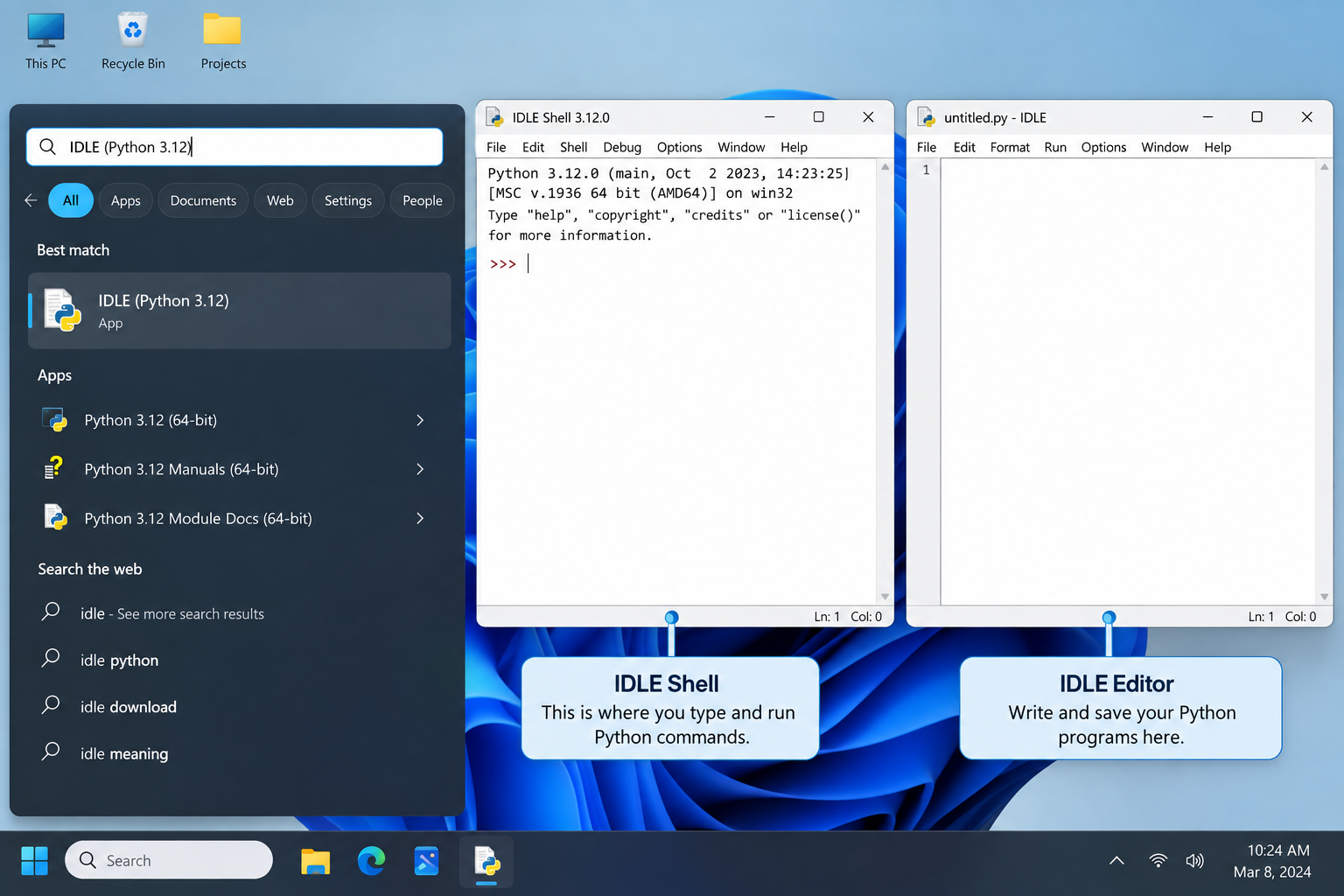
刚在Windows安装好Python却不知道如何启动?本文详细演示如何通过开始菜单找到并打开IDLE集成开发环境,以及如何在PowerShell或命令提示符中使用python和py命令启动交互式解释器、运行.py脚本文件。包含退出解释器的方法及常见启动问题排查,帮助初学者快速验证安装成功并开始编写代码。

针对Windows初学者的Python安装实战指南。详细讲解如何从Python官网下载匹配架构的安装包,重点演示安装首屏勾选“Add python.exe to PATH”的关键操作,并提供使用python --version和py命令验证环境变量的具体步骤,帮助新手快速搭建开发环境并排查路径问题。

要想确认麒麟OS中Python程序的运行状态以及资源占用情况,我们可以这样做:用ps -ef | grep python来筛选进程;通过top命令,按P键排序查看实时负载;使用pgrep -f "script.py"精准获取PID;借助lsof -p PID验证文件打开状态。另外,还可以结合syst

在Debian系统上配置SSL证书通常涉及以下几个步骤:安装Web服务器:首先,你需要一个Web服务器,比如Apache或Nginx。这里以Apache为例。sudo apt updatesudo apt install apache2获取SSL证书:你可以从Let’s Encrypt免费获取SSL

要想让Python项目在统信UOS上正常运行,得先安装python3、python3-pip、python3-venv、python3-dev以及build-essential等组件。具体操作就是执行sudo apt install命令来一步到位完成安装,同时别忘了配置清华镜像源来给pip加速哦。在

在互联网上的各类网站中,无论大小,基本上都会有一个搜索框,用来给用户对内容进行搜索,小到站点搜索,大到搜索引擎搜索。从简单的来说,搜索功能确实很简单,一个简单的select语句就可以实现数据的搜索。而从复杂的来看,无论是搜索的精度还是搜索的效率,都是有很深的研究范围的。对于简单的搜索功能来说,一个s

立即在终端输入sudo shutdown -c取消倒计时关机,成功后显示“Shutdown cancelled”;若存在pmset重复任务,需再执行sudo pmset repeat cancel清除。Mac因Python脚本执行了os.system("sudo shutdown -h +10")或

之前写过一篇同步场景下用 Python 管理多个固定出口 IP 的实践(ExitPool + requests/httpx),覆盖了健康检查、故障转移和连接池复用。但在实际业务中,越来越多的场景用 asyncio 做高并发采集或批量接口调用——异步事件循环下多出口的管理方式和同步场景完全不同:单线程

写在前面:为什么静态出口 IP 不是"买了就行"不少团队在引入静态出口 IP 产品时,第一反应往往是:“地址配上去,这事就算完了。”可真到了真实业务里,静态出口 IP 真正能体现价值的地方,往往不在分配这一步,而在分配之后怎么管:地址有没有漂移,质量是否达标,某一条线路突然不可用时怎么切换,连接层又

命名空间的基本概念与常见引入问题在C++等编程语言中,命名空间(namespace)是一种将代码标识符(如变量、函数、类名)封装在特定名称下的机制,其主要目的是避免命名冲突,尤其是在大型项目或使用多个第三方库时。使用“using namespace”指令可以将指定命名空间中的所有名称引入当前作用域,






Windows 10 是一款微软推出的经典操作系统,拥有硬件兼容性与多任务处理能力。它更偏向把系统状态查看和常用调节动作放在一起,适合需要持续观察和微调设备状态的场景。

极度公式是一款跨平台专业LaTeX公式识别编辑软件,支持OCR公式识别和多平台编辑。和使用说明,避免使用,享受完整功能与稳定支持。做扫描整理、文字提取和表格转换时,它能把识别后的处理步骤接得更顺,资料录入这类场景会省下不少时间。